Contact us for a Free Quote today

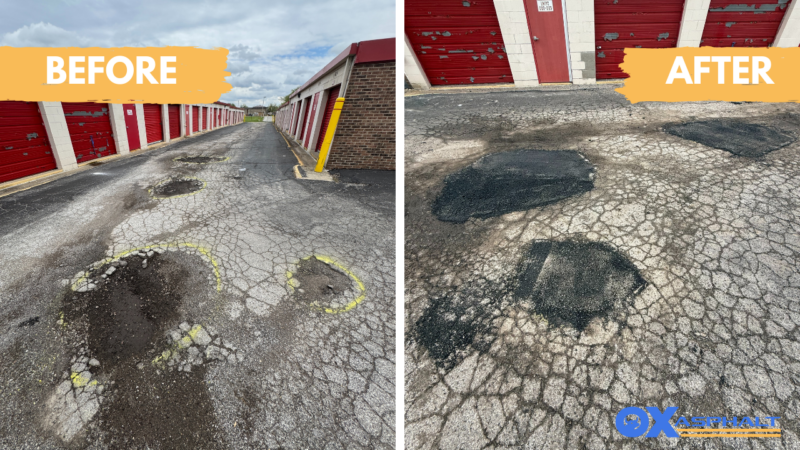
Every spring in Indianapolis, property owners face the same frustrating discovery: potholes. Winter’s freeze-thaw cycles leave driveways and parking lots riddled with craters that damage vehicles, create liability risks, and make your property look neglected. The question is not whether you need pothole repair but whether you should tackle it yourself or hire a professional.
The answer depends on the size of the problem, the type of property you own, and how long you need the repair to last. A small driveway pothole might be a reasonable weekend project, but a parking lot full of potholes requires professional pothole repair to avoid wasting money on fixes that fail within months. Indianapolis property owners who understand the difference between DIY pothole repair and professional work make better decisions that protect their investment for years instead of weeks.
This guide breaks down both options honestly so you can decide which approach makes the most sense for your specific situation, your budget, and your property.
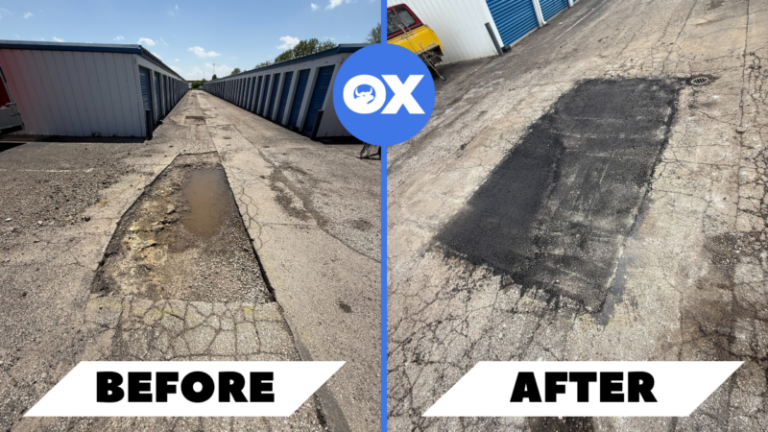
Before you decide how to fix a pothole, it helps to understand why it formed in the first place. Potholes are not random. They follow a predictable pattern of pavement failure that starts long before the surface breaks apart.
Indianapolis averages over 80 freeze-thaw cycles per winter season. Water seeps into small cracks in the asphalt surface during rain or snowmelt. According to the Federal Highway Administration, timely pavement preservation significantly extends service life. When temperatures drop below freezing, that water expands as it turns to ice, pushing the crack wider. When it thaws, the gap remains larger than before. Vehicles driving over this weakened area push the asphalt downward, and the cycle repeats with every temperature swing between November and March.
This freeze-thaw cycle damages pavement at an accelerated rate in Central Indiana. The combination of wet conditions and rapid temperature changes means Indianapolis properties experience more pothole-forming events per season than many other parts of the country.
The real damage happens below the surface. When water reaches the aggregate base layer beneath the asphalt, it erodes the material that supports the pavement structure. The base shifts and settles unevenly, creating voids beneath the surface. The U.S. Department of Transportation identifies pothole damage as a major infrastructure concern. When a vehicle drives over one of these voids, the unsupported asphalt collapses inward, forming a pothole.
This is why pothole repair that only addresses the surface often fails quickly. If the base material underneath has eroded or shifted, a surface patch is sitting on an unstable foundation. Understanding this distinction is critical when deciding between DIY and professional approaches.
Most potholes are preventable. Regular crack sealing stops water from penetrating the base in the first place. Sealcoating protects the asphalt binder from UV oxidation and chemical damage that makes surfaces more vulnerable to cracking. Property owners who skip routine maintenance end up spending far more on pothole repair than they would have spent on prevention.
There are situations where DIY pothole repair is a reasonable option. If you are dealing with a small, shallow pothole on a residential driveway, a cold patch product from a hardware store can provide a temporary fix that lasts through one or two seasons.
The basic process for DIY pothole repair is straightforward. You clean all loose debris and standing water from the pothole. You fill it with a cold patch asphalt product available at most home improvement stores in Indianapolis. You compact the material by tamping it down firmly or driving over it with a vehicle tire. Some products require a tack coat applied to the edges first for better adhesion.
Cold patch products are designed for small repairs and temporary fixes. They use a different binder than hot mix asphalt, which allows them to be applied at ambient temperatures without specialized equipment. This convenience is their main advantage and their main limitation.
DIY pothole repair works best under specific conditions. The pothole should be smaller than about 12 inches in diameter and less than 3 inches deep. The surrounding asphalt should be in reasonably good condition with no signs of widespread cracking or base failure. The repair should be on a low-traffic residential surface like a driveway or private walkway.
If the pothole meets these criteria and you need a quick fix while planning more comprehensive maintenance, a DIY cold patch can bridge the gap. Many Indianapolis homeowners use cold patch to get through the rest of winter before scheduling professional work in the spring.
A bag of cold patch asphalt costs between $15 and $30 at most hardware stores. For a single small pothole, you might spend under $50 on materials. That sounds like a bargain compared to hiring a contractor.
But the true cost includes your time, the tools you need (a tamper or hand compactor, a broom, possibly a tack coat), and most importantly, the likelihood that you will need to repeat the repair. Cold patch in a pothole on a residential driveway typically lasts 6 to 18 months depending on traffic and weather conditions. Some homeowners find themselves patching the same hole every spring.
Over three to five years, repeated DIY repairs on the same pothole can cost more than a single professional repair that addresses the root cause. The cost of pothole repair through DIY methods adds up when you account for repeat applications.
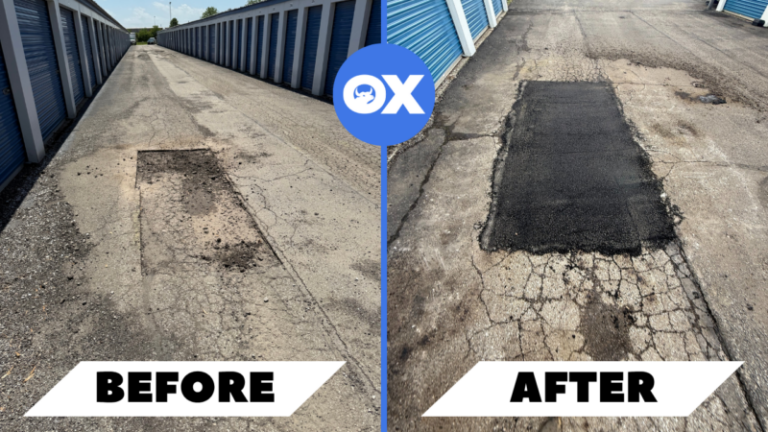
Professional pothole repair uses different materials, equipment, and techniques than DIY approaches. The result is a repair that lasts significantly longer and addresses the underlying cause of the failure, not just the visible damage on the surface.
A professional asphalt contractor approaches pothole repair as a structural repair, not just a cosmetic patch. The process typically involves several steps that DIY methods skip entirely.
First, the contractor cuts the damaged area into a clean geometric shape, usually a rectangle, using a saw or milling machine. This removes all compromised asphalt around the pothole, not just the material inside it. Irregular edges left by simply filling a pothole create weak points where the patch meets the existing surface.
Next, the contractor excavates the failed base material and inspects the subgrade. If the base has eroded or shifted, they rebuild it with fresh compacted aggregate before placing any asphalt. This step is what separates a lasting repair from one that fails within a season.
The contractor then applies a tack coat to bond the new asphalt to the existing pavement edges. They fill the prepared area with hot mix asphalt, which is the same material used for new pavement installation, and compact it with professional equipment to achieve proper density. The finished repair is flush with the surrounding surface and structurally sound.
The difference between hot mix asphalt and cold patch is substantial. Hot mix asphalt is produced at a plant at temperatures between 275 and 300 degrees Fahrenheit. At these temperatures, the asphalt binder fully coats and bonds with the aggregate, creating a dense, water-resistant material that can support heavy loads.
Cold patch uses a solvent-based or emulsion-based binder that allows it to remain workable at ambient temperatures. While convenient, this binder never achieves the same density or bond strength as hot mix. Cold patch is more porous, more susceptible to water infiltration, and more likely to crack or crumble under traffic loads.
For commercial parking lots in Indianapolis, the difference matters enormously. A cold patch repair in a parking lot that handles daily traffic from cars, delivery trucks, and heavy vehicles will deteriorate rapidly. Professional pothole repair using hot mix asphalt can last 5 to 10 years or longer in the same conditions.
Some situations demand professional pothole repair regardless of budget concerns. Multiple potholes across the surface indicate systemic problems that require professional assessment. Commercial parking lot maintenance requires professional standards for both quality and liability reasons. A pothole in a commercial lot that causes a customer injury can result in a lawsuit that dwarfs the cost of proper repair.
Potholes larger than 12 inches or deeper than 3 inches indicate more extensive base failure that cold patch cannot address. Potholes that keep coming back mean the base has failed and needs professional reconstruction. And potholes near drainage structures require proper drainage considerations as part of the repair.
Understanding the cost of pothole repair for both approaches helps you make a decision based on value, not just the initial price tag.
Materials for a single small pothole repair typically cost $15 to $50. If you need to buy tools like a tamper ($20 to $40) or tack coat ($10 to $15), your first repair runs closer to $75 to $100. Each subsequent repair of the same pothole costs another $15 to $50 in materials plus an hour or two of your time.
Over five years with annual re-patching, a single pothole can cost $100 to $300 in materials alone through the DIY approach. If you have multiple potholes, multiply accordingly.
Professional pothole repair in Indianapolis typically costs $100 to $500 per pothole depending on size, depth, and the condition of the base. A full-depth repair on a larger area may cost $800 to $1,500. For commercial parking lots with multiple potholes, contractors often price by the square foot, typically $8 to $15 per square foot for full-depth repairs.
While the upfront cost is higher, a professional repair done correctly should last 5 to 10 years or longer. When you divide the cost over the lifespan of the repair, professional work almost always costs less per year than repeated DIY patches.
Choosing DIY when you need professional work creates hidden costs beyond just repeat material purchases. Vehicle damage from a pothole that was not properly repaired can cost hundreds in alignment, tire, and suspension repairs. Liability exposure on commercial properties increases every day a pothole remains inadequately patched. Property value decreases when visitors see a surface covered in patchwork repairs. The cost of delaying maintenance always exceeds the cost of timely professional pothole repair.
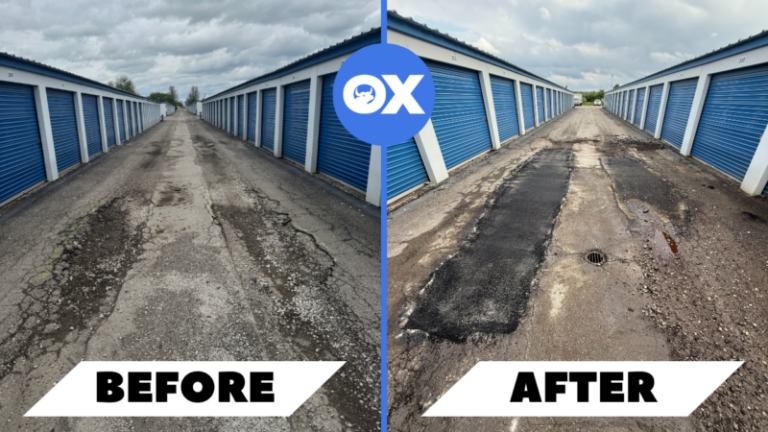
Timing matters for pothole repair in Indianapolis. Both DIY and professional approaches have seasonal limitations that affect when you can make lasting repairs.
Hot mix asphalt requires air temperatures above 50 degrees Fahrenheit for proper placement and compaction. In Indianapolis, this means the professional paving season runs roughly from mid-April through early November. Scheduling pothole repair during this window gives you the best chance of a lasting result.
Spring is the busiest season for pothole repair in the Indianapolis area because winter damage becomes fully visible as temperatures warm. Property owners in Carmel, Fishers, Greenwood, Noblesville, and across the metro area all compete for contractor availability during April and May. Scheduling early gives you better options.
When potholes appear during winter months and cannot wait until spring, cold patch is the standard temporary solution. Both DIY homeowners and professional contractors use cold patch for winter emergency repairs because hot mix is not available when plants are closed for the season.
The difference is that a professional applying cold patch will typically clean and prepare the area more thoroughly and use commercial-grade products that outperform retail cold patch. They may also flag the area for permanent hot mix repair when spring arrives.
The most expensive time to ignore a pothole is late fall through early spring. Every freeze-thaw cycle enlarges the damage. A pothole that costs $200 to repair professionally in October might cost $500 to $800 by the following April if it has been growing all winter. Taking action on pothole repair before winter arrives saves significant money.
Professional contractors have several asphalt patching techniques available depending on the severity and location of the damage. Understanding these methods helps you evaluate contractor proposals and ask informed questions.
This is the simplest professional method, similar to DIY but executed with better materials and equipment. The contractor places asphalt material in the pothole and compacts it with a roller or truck tire. It is used for temporary repairs or minor surface damage where base failure is not a factor.
The semi-permanent method involves cleaning the pothole, squaring the edges, and filling with hot mix asphalt that is properly compacted. The base is not excavated, so this works best when the base is still intact but the surface has failed. This is the most common pothole repair method for potholes where the damage is primarily in the surface layer.
A full-depth patch is the most comprehensive pothole repair method. The contractor removes the damaged asphalt and compromised base material entirely, rebuilds the base with fresh aggregate, and installs new hot mix asphalt from the subgrade up. This method addresses the root cause of the failure and provides the longest-lasting result.
Full-depth patching is essential when asphalt shows signs of base failure such as alligator cracking around the pothole, significant depression, or repeated failure of previous patches.
Infrared technology heats the existing asphalt around the damaged area to a workable temperature, allowing the contractor to blend new material seamlessly with the surrounding surface. This creates a stronger bond than traditional cut-and-patch methods and eliminates the seams where water typically infiltrates.
Infrared patching works well for moderate potholes where the base is still sound. It produces a virtually seamless pothole repair that is less visible than conventional patching, which matters for commercial properties where appearance affects customer perception.
The approach to pothole repair differs significantly between commercial parking lots and residential driveways. Property type should be a major factor in your DIY vs professional decision.
Homeowners in Indianapolis have more flexibility with pothole repair decisions. A residential driveway handles relatively light traffic from personal vehicles. The consequence of a repair failure is mainly cosmetic and inconvenient, not a safety or legal liability issue.
For residential properties, DIY pothole repair makes sense for small, isolated damage on an otherwise sound surface. However, if your driveway shows widespread cracking, multiple potholes, or drainage issues, professional assessment is worthwhile. A contractor can evaluate whether spot repairs will suffice or whether the driveway needs more comprehensive work like an asphalt overlay to address broader deterioration.
Commercial property owners should almost always choose professional pothole repair. The stakes are higher in every dimension: safety liability, customer perception, traffic volume, and regulatory compliance.
A pothole in a commercial parking lot can cause vehicle damage that your business may be liable for. It can cause pedestrian injuries that lead to lawsuits. It signals neglect to customers who form opinions about your business based on the condition of your property. And it can create ADA compliance violations if the damage affects accessible routes or parking spaces.
Professional parking lot striping should be refreshed after pothole repairs to maintain clear traffic flow and parking organization. This is another area where professional service ensures the complete job is done right.
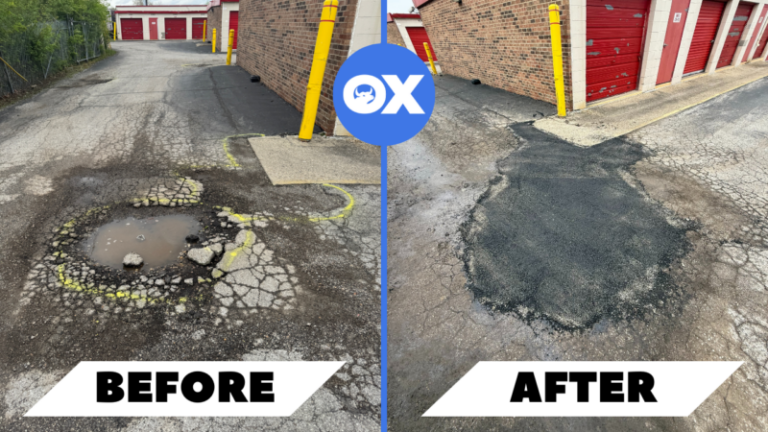
Use this decision framework to determine the right approach for your situation.
The pothole is on a residential driveway or low-traffic private surface. It is smaller than 12 inches across and less than 3 inches deep. The surrounding asphalt is in fair to good condition. You understand the repair is temporary and may need repeating. You are comfortable with the repair process and have time to do it properly.
The pothole is on a commercial property. The pothole is larger than 12 inches or deeper than 3 inches. Multiple potholes are present across the surface. Previous DIY repairs have failed. The surrounding asphalt shows alligator cracking or widespread deterioration. The pothole is near a drainage structure or in an area that collects water. You need a pothole repair that lasts multiple years without retreatment.
When you decide professional pothole repair is the right choice, ask these questions to evaluate contractors. What repair method do you recommend for this specific damage? Will you address the base or just the surface? What type of asphalt will you use? How long should the repair last? Do you offer any warranty on the work?
A reputable contractor will assess your specific damage before recommending a repair method. Proper assessment is part of choosing the right asphalt contractor for any project.
The most cost-effective approach to pothole repair is preventing them from forming in the first place. A basic preventive maintenance program costs a fraction of what reactive repairs cost over time.
Sealcoating creates a protective barrier that blocks water, UV rays, and chemicals from reaching the asphalt binder. For Indianapolis properties, sealcoating every two to three years is the single most effective way to prevent the surface deterioration that leads to cracking and eventually potholes.
Cracks are the entry point for water that causes base erosion and pothole formation. Professional crack sealing fills these gaps with a flexible, waterproof material that moves with the asphalt as temperatures change. Annual crack inspection and sealing after each winter season keeps small problems from becoming expensive pothole repair projects.
Water is the primary enemy of asphalt pavement. Maintaining clean catch basins, ensuring proper surface grading, and addressing standing water issues prevents the subsurface erosion that creates potholes. Properties with proper drainage planning experience significantly fewer pothole problems than those where water is allowed to pool.
Pothole repair in Indianapolis comes down to matching the right solution to your specific situation. DIY cold patch has its place for small, temporary fixes on residential driveways. But for commercial properties, larger damage, recurring problems, or any situation where you need a repair that lasts, professional pothole repair delivers better value per dollar spent over the life of the repair.
The worst decision is doing nothing. Every freeze-thaw cycle, every rainstorm, and every vehicle that drives over an unrepaired pothole makes the damage worse and the eventual repair more expensive. Whether you grab a bag of cold patch this weekend or call a contractor on Monday, taking action now costs less than waiting.