Contact us for a Free Quote today

If you own or manage a property in Indianapolis, you’ve probably noticed cracks creeping across your parking lot or driveway, especially after a brutal Indiana winter. Understanding why asphalt cracks is the first step toward protecting your investment and avoiding expensive repairs down the road. Whether you manage a commercial property in Carmel or own a home in Fishers, the pavement under your feet faces the same enemies: water, weather, and time.
In this guide, we’ll break down every major cause of asphalt cracking, explain which types of cracks you’re likely seeing on your Indiana property, and give you a practical prevention plan that actually works.
Asphalt pavement is tough, but it isn’t invincible. Every parking lot and driveway in Indiana faces a combination of forces that break down the surface over time. So why does asphalt crack? It comes down to four main factors working together: environmental stress, water infiltration, traffic loads, and the natural aging of the asphalt binder itself.
When asphalt is first installed, the binder (the liquid asphalt cement that holds everything together) is flexible and resilient. Over time, exposure to oxygen, UV rays, and temperature swings causes the binder to harden and become brittle. Once the pavement loses its flexibility, it can no longer absorb the stresses placed on it. That’s when cracks form.
For property owners across Indianapolis, Greenwood, Noblesville, and the surrounding metro area, the combination of hot summers and harsh winters creates a particularly aggressive environment for asphalt. Indiana’s climate puts pavement through extreme temperature swings that most states never experience, making crack prevention an essential part of property maintenance.
If there’s one factor that causes more asphalt damage in Indiana than anything else, it’s the freeze-thaw cycle. Indianapolis typically experiences dozens of freeze-thaw cycles every winter, and each one chips away at your pavement’s integrity.
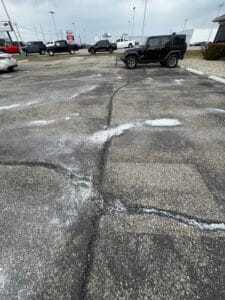
Here’s how it works. Water seeps into small surface cracks or pores in the asphalt. When temperatures drop below freezing, which happens frequently between November and March in central Indiana, that water expands as it turns to ice. This expansion puts tremendous pressure on the surrounding pavement from the inside out.
When temperatures rise the next day, the ice melts, the water settles deeper into the now-widened crack, and the whole process repeats. Each cycle makes the crack a little bigger, a little deeper. What starts as a hairline crack in October can become a significant structural problem by March.
Central Indiana’s climate is particularly harsh on asphalt because temperatures frequently hover right around the freezing point during winter months. Cities like Zionsville, Brownsburg, and Avon regularly see daily temperature swings of 20 to 30 degrees during late fall and early spring. This constant oscillation around 32°F means pavement endures more freeze-thaw cycles than regions with consistently cold or consistently warm winters.
According to the Federal Highway Administration’s research on environmental impacts on pavement, transverse cracking of asphalt-concrete pavement is significantly higher in regions that experience frequent freeze-thaw cycling compared to stable-temperature climates.
The bottom line: if you’re wondering why does asphalt crack so much around here and you own property in the Indianapolis metro area, freeze-thaw damage isn’t a possibility, it’s a certainty. The only question is whether you’ll address it proactively or reactively.
Not all asphalt cracks are the same, and understanding why does asphalt crack in different patterns is key to choosing the right fix. Understanding which type of cracking you’re dealing with helps determine the right repair approach. Here are the six types you’ll most commonly see on Indiana properties.
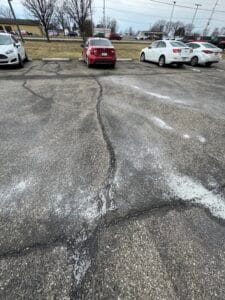
Fatigue cracking looks exactly like it sounds, a network of interconnected cracks that resembles alligator skin. This is typically caused by repeated traffic loads on pavement that has weakened over time. You’ll often see this in high-traffic areas of parking lots, drive lanes, and loading zones.
Alligator cracking is a sign that the pavement structure is failing, usually because the base layer has deteriorated or was inadequate from the start. This is one of the more serious types of pavement damage and often requires more than just surface treatment to fix properly.
These run parallel to the direction the pavement was laid. They often form along the seams where two passes of the paving machine met. Poor joint construction during installation is a common cause, though they can also develop from asphalt shrinkage due to temperature changes.
Transverse cracks run perpendicular to the pavement’s centerline. These are almost always caused by thermal contraction and the asphalt shrinks in cold weather and cracks under the stress. In Indiana, transverse cracking is extremely common given our wide temperature swings.
Block cracks create a pattern of roughly rectangular pieces across the pavement surface. Unlike alligator cracking, block cracking isn’t caused by traffic loads. Instead, it results from the asphalt binder hardening and shrinking over time. You’ll see this on older pavements that haven’t been maintained with regular sealcoating.
Edge cracks form along the outer edges of the pavement, typically within a few inches of where the asphalt meets the s
houlder or curb. Poor drainage, lack of shoulder support, and vegetation growth are the usual culprits. Commercial properties in Plainfield, Avon, and other suburbs where parking lots border unpaved areas are especially prone to edge cracking.
If your property has had an asphalt overlay placed over an existing cracked surface, reflective cracks can develop. These occur when the old cracks beneath the new layer telegraph upward through the overlay. It’s a common issue and one reason why proper preparation before overlay work is so critical.
The FHWA’s Distress Identification Manual classifies these crack types by severity level – low, moderate, and high – which helps pavement professionals determine the appropriate repair strategy.
While freeze-thaw gets most of the attention in Indiana, UV radiation and oxidation quietly degrade your asphalt year-round. During the summer months, Indianapolis can see extended periods of direct sun exposure with temperatures exceeding 90°F. This heat bakes the asphalt binder, accelerating a process called oxidation.
Oxidation is the chemical reaction between the asphalt binder and oxygen in the air. As the binder oxidizes, it loses the oils that keep it flexible. The surface becomes gray, dry, and brittle. You’ve probably seen this on older driveways or parking lots that have faded from rich black to dull gray, that’s oxidation in action.
Once the binder hardens, the pavement can no longer flex with temperature changes or absorb the impact of traffic loads. This makes the surface far more susceptible to cracking. A sealcoated surface resists UV penetration much better than bare asphalt, which is why regular sealcoating is one of the most cost-effective maintenance strategies for any Indiana property.
Think of sealcoating like sunscreen for your pavement. Without it, the sun slowly breaks down the surface. With it, you add years of protection for a fraction of the cost of repaving.
Water is the single most destructive force for asphalt pavement. Even small amounts of standing water can cause serious pavement damage if the drainage isn’t working properly. When water pools on the surface or collects near the pavement edges, it finds its way into every crack, seam, and pore.
Once water penetrates below the surface, it softens the base and sub-base layers that support the pavement. This weakened foundation can no longer hold up under traffic loads, leading to depressions, potholes, and widespread fatigue cracking. In the Indianapolis area, spring is an especially dangerous time, melting snow combined with heavy spring rains can saturate the ground underneath your pavement.
Pay attention to these warning signs on your property. Standing water that takes more than a few hours to drain after rainfall is a red flag. Puddles that form in the same spots repeatedly indicate low spots or inadequate grading. Water running along pavement edges rather than away from the surface suggests your drainage infrastructure needs attention.
For commercial property managers in Indianapolis, Carmel, and Fishers, drainage issues left unaddressed can turn a minor crack repair into a full parking lot reconstruction. The cost difference between proactive drainage maintenance and reactive reconstruction is substantial.
Every vehicle that drives across your pavement applies stress to the surface. Over thousands of repetitions, this stress fatigues the asphalt and eventually causes cracking, particularly in areas with heavy vehicle traffic.
Commercial parking lots see the worst of this. Delivery trucks, garbage trucks, fire lanes, and high-traffic drive aisles all concentrate heavy loads on specific areas of the pavement. If the pavement wasn’t designed to handle those loads, or if the base has been compromised by water infiltration, fatigue cracking develops quickly.
On commercial properties, look for cracks in these areas first. Drive lanes and entry points where every vehicle passes tend to show wear earliest. Loading docks and dumpster pads take concentrated heavy loads from trucks. Areas near entrances where vehicles brake and accelerate see extra stress from the twisting forces on the pavement surface.
Residential driveways in the Indianapolis metro area face a different version of this problem. While individual cars are lighter, concentrated traffic over a narrow driveway, combined with the occasional heavy delivery truck or moving van, can stress the edges and transitions where the driveway meets the street.
Preventing load-related cracking starts at the design phase. Proper pavement thickness, adequate base preparation, and quality materials all make a difference. For existing pavement, keeping the surface sealed and addressing cracks early prevents water from weakening the foundation, which is where most load-related failures actually begin.
Now for the part that matters most: what can you actually do to prevent asphalt cracks and extend the life of your pavement? Here’s a practical prevention plan that works for both commercial and residential properties in Indiana.
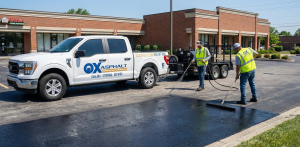
Sealcoating is the single most cost-effective preventive measure you can take. A quality sealcoat application creates a protective barrier that shields the asphalt binder from UV rays, water, and chemical spills. For Indiana properties, sealcoating every two to three years is the standard recommendation.
Timing matters. The best time to sealcoat in Indianapolis is between late spring and early fall, when temperatures are consistently above 50°F and there’s no rain in the forecast for at least 24 hours. Read our complete guide on sealcoating frequency for more details on timing and best practices.
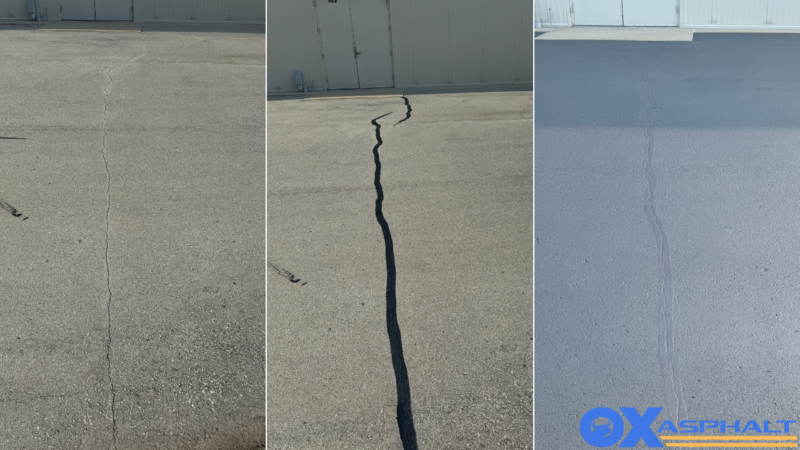
Crack sealing is most effective when done early, before small cracks become big problems. The National Asphalt Pavement Association (NAPA) recommends sealing cracks as soon as they appear, ideally when they’re between a quarter-inch and one inch wide.
Professional crack sealants are made from rubberized asphalt or modified polymers that flex with temperature changes. This flexibility is critical in Indiana, where the pavement expands and contracts with every temperature swing. A proper crack seal creates a waterproof barrier that keeps moisture out and prevents freeze-thaw damage from destroying the pavement from the inside.
For a detailed look at the crack sealing process, check out our Complete Guide to Asphalt Crack Sealing.
Make sure water flows away from your pavement, not across it or underneath it. Inspect your drainage systems at least twice a year,
once in spring after the thaw and once in fall before winter. Clear catch basins, check for standing water, and correct any areas where water is pooling.
If you notice depressions, sinking, or widespread alligator cracking, the problem is likely below the surface. Patching the top without fixing the base is a temporary fix at best. A professional assessment can determine whether you need base repair, full-depth patching, or reconstruction of the affected area.
The most cost-effective approach to crack prevention is an annual maintenance plan that combines inspection, crack sealing, sealcoating, and spot repairs. Property managers who follow a maintenance schedule consistently spend less on pavement over a 20-year period than those who wait for problems to become emergencies.
Some crack repairs are simple enough for a property owner to handle with a hardware-store sealant. But many situations require professional equipment and expertise to fix properly.
Call a professional asphalt contractor when you see any of these conditions. Cracks wider than one inch need professional routing and sealing equipment. Alligator cracking indicates structural failure that requires base assessment. Large areas of block cracking suggest the pavement has reached the end of its maintainable life. Potholes forming from existing cracks mean water has already compromised the base. Any cracking combined with standing water or drainage problems needs professional evaluation.
In Indianapolis and the surrounding communities, from Greenwood to Noblesville, Zionsville to Plainfield, the window for asphalt repair work is best between April and November. Cold-weather repairs are possible but generally less durable. Planning your maintenance during the warmer months gives you the best results and the longest-lasting repairs.
When your Indianapolis-area property needs professional asphalt crack repair and prevention, Ox Asphalt is the locally owned and operated team that gets it done right.
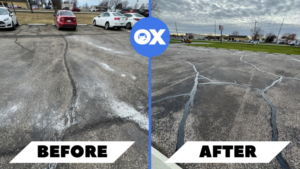
We serve commercial property managers, facility managers, HOAs, and homeowners across Indianapolis, Carmel, Fishers, Noblesville, Greenwood, Zionsville, Brownsburg, Avon, and Plainfield. Our team understands Indiana’s unique climate challenges, from freeze-thaw cycles to summer heat, because we live and work here every day.
Whether you need a targeted crack sealing application, a full crack repair project, or a long-term crack prevention plan, we’ll give you an honest assessment and a fair price