Contact us for a Free Quote today


Hiring the wrong asphalt paving contractor can cost you thousands of dollars, months of frustration, and a parking lot or driveway that falls apart within a few years. If you own commercial property or a home in Indianapolis, knowing how to choose asphalt paving contractor services that deliver lasting results is one of the most important decisions you will make for your property. The wrong contractor cuts corners. The right one protects your investment for years.
Indianapolis property owners face unique challenges when selecting an asphalt company. Indiana’s freeze-thaw cycles, heavy clay soils, and seasonal weather extremes demand contractors who understand local conditions, not just general paving techniques. A contractor from out of state or one without experience in Central Indiana may not account for the drainage issues and temperature swings that destroy poorly installed asphalt across Carmel, Fishers, Greenwood, and the surrounding metro area.
This guide walks you through every factor you need to evaluate before signing a contract, from licensing and insurance to material quality and long-term maintenance plans.
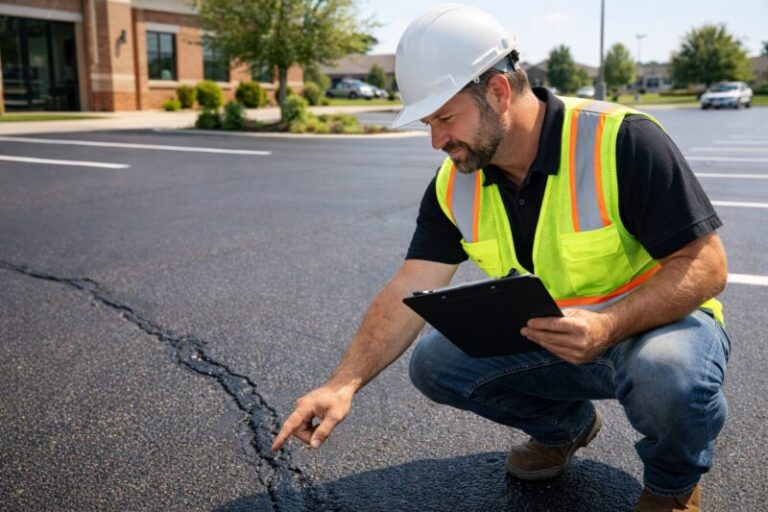
The difference between a quality paving job and a poor one often comes down to the contractor you hire. A well-installed asphalt surface in Indiana should last 15 to 20 years with proper maintenance. A poorly installed one may start showing cracks, potholes, and drainage problems within the first two or three seasons.
Indiana’s climate is particularly hard on asphalt. Water seeps into small cracks during fall rains, freezes and expands during winter, then thaws and refreezes repeatedly between November and March. This freeze-thaw cycle damages pavement at an accelerated rate when the original installation was done incorrectly. Poor compaction, inadequate base preparation, or low-quality hot mix asphalt all make surfaces more vulnerable to this seasonal punishment.
Choosing the wrong contractor does not just mean a bad-looking surface. It means premature failure, expensive repairs, potential liability issues, and lost revenue for commercial properties. Property managers in Noblesville, Lawrence, and Plainfield deal with these consequences every spring when winter damage reveals the true quality of their pavement.
Before you evaluate any contractor’s work quality or pricing, verify the basics. In Indiana, contractors must carry proper licensing and insurance to operate legally. Any reputable asphalt paving contractor will provide proof of these documents without hesitation.
Request copies of the contractor’s general liability insurance, workers’ compensation coverage, and any applicable state or local business licenses. General liability insurance protects your property if the contractor causes damage during the project. Workers’ compensation protects you from liability if a crew member is injured on your property.
Ask for a certificate of insurance directly from the contractor’s insurance carrier, not just a photocopy. Certificates can be verified by calling the insurance company listed on the document. A legitimate contractor will have no problem providing this, and any hesitation should raise a red flag.
For larger commercial projects, bonding provides an additional layer of protection. A performance bond guarantees the contractor will complete the project as specified. A payment bond ensures subcontractors and material suppliers get paid, preventing mechanics’ liens against your property.
You can verify Indiana business registrations through the Indiana Secretary of State’s Business Entity Search and check complaint history through the Better Business Bureau.
Experience matters in asphalt paving, but local experience matters even more. A contractor who has been paving in Indianapolis for a decade understands the specific soil conditions, drainage patterns, and climate challenges that affect project outcomes in Central Indiana.
Ask how long the contractor has been operating in the Indianapolis area specifically. National companies or franchises may have impressive total years in business, but their local crew might be brand new to Indiana conditions. You want a team that has paved through Indiana’s harsh winters and humid summers.
Request a list of completed projects in your area. Drive by a few of them if possible. A parking lot paved three or four years ago will tell you much more about quality than one completed last month. Look for surfaces that are still smooth, well-drained, and free of major cracking. If the contractor’s past work already shows signs of premature cracking, that tells you everything you need to know.
Ask for references from projects similar to yours. If you need a commercial parking lot paved, references from residential driveway customers are not as relevant. The scope, materials, and techniques differ significantly between residential and commercial work.
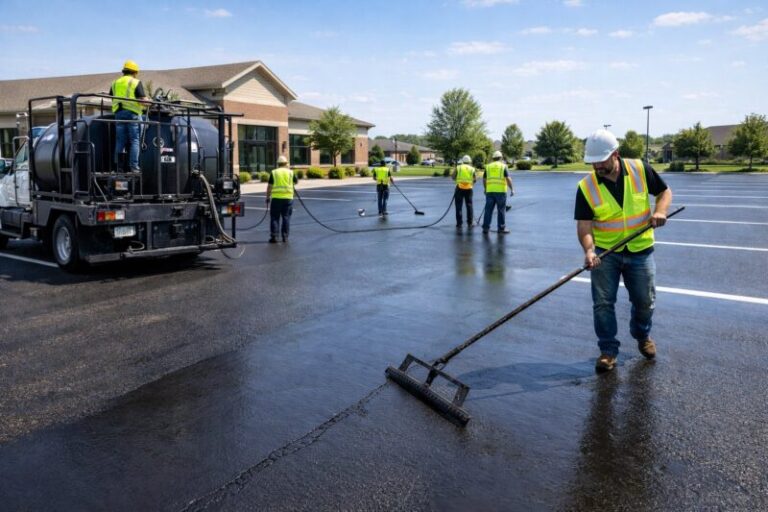
Price is important, but the cheapest estimate is rarely the best value. When you are learning how to choose asphalt paving contractor services, understanding what is included in each estimate is more important than the bottom line number.
A professional estimate should itemize the following components clearly. If any of these are missing, ask the contractor to add them before you compare bids.
Site Preparation: This includes removal of existing pavement (if applicable), grading, soil compaction, and base material installation. The base is the foundation of your entire asphalt surface. Contractors who skip proper base preparation to save time are setting you up for failure. A typical commercial parking lot in Indianapolis needs a compacted aggregate base of six to eight inches depending on traffic loads and soil conditions.
Materials Specification: The estimate should specify the type and thickness of hot mix asphalt being used. For most commercial applications in Indiana, you need a minimum of two to three inches of surface course over a properly prepared base. Residential driveways typically need two inches minimum. Ask what mix design the contractor plans to use and whether it meets Indiana Department of Transportation specifications.
Drainage Plan: Proper drainage is critical for asphalt longevity in Indianapolis. Water that pools on the surface or seeps underneath accelerates deterioration. The estimate should address how water will be directed away from the paved surface, whether through grading, catch basins, or channel drains.
Timeline and Phasing: For commercial projects, ask how the contractor plans to phase the work to minimize disruption to your business. A good contractor will have a plan for maintaining access to your property during construction.
Warranty Terms: Get the warranty in writing as part of the estimate. A reputable asphalt company will stand behind their work with a written warranty that specifies what is covered and for how long.
Be cautious of estimates that are significantly lower than competitors. Low bids often indicate thinner asphalt, poor base preparation, or the use of recycled materials without proper disclosure. An estimate that is 30 percent below the average of three or more bids likely involves cutting corners somewhere.
Watch out for contractors who pressure you to sign immediately or offer a discount for “leftover material from another job.” Quality hot mix asphalt is produced to specification at a plant. Legitimate contractors do not have random surplus material sitting around.
Professional asphalt paving requires specialized, well-maintained equipment. The quality of the equipment directly affects the quality of the finished surface.
A contractor paving a commercial parking lot should arrive with a paving machine (not just hand-laying asphalt), proper rollers for compaction (both steel drum and pneumatic), and equipment for base preparation. Hand-laid asphalt is acceptable for small patches and repairs, but it cannot match the consistency and compaction of machine-laid surfaces for large areas.
Ask how many crew members will be on site. Asphalt paving is time-sensitive work because the material must be placed and compacted while it is still hot. An undersized crew cannot keep up with the paving machine, leading to cold joints, poor compaction, and an uneven surface.
For a standard commercial parking lot in the Indianapolis area, expect a crew of at least four to six workers plus equipment operators. Residential driveways typically require a smaller crew, but the same principles of proper equipment and adequate staffing apply.

Not all asphalt is created equal. The hot mix asphalt used for your project should come from a reputable plant that produces material meeting Indiana Department of Transportation (INDOT) specifications.
Ask the contractor which asphalt plant supplies their material. In the Indianapolis metro area, several plants produce high-quality hot mix. A contractor who is vague about material sourcing or cannot name their supplier is a concern.
The mix design matters too. Different applications require different asphalt mixes. A parking lot that handles heavy truck traffic needs a different mix than a residential driveway. Your contractor should be able to explain why they selected a specific mix design for your project.
Temperature at delivery is another quality indicator. Hot mix asphalt needs to arrive at the job site within the proper temperature range (typically between 275 and 300 degrees Fahrenheit) to achieve proper compaction. Ask the contractor how they verify material temperature on delivery. Most reputable contractors check temperature with a probe thermometer when the truck arrives.
Proper compaction is what separates asphalt that lasts from asphalt that fails early. The industry standard for compaction density is 92 to 96 percent of the theoretical maximum density. Ask your contractor what compaction density they target and how they verify it. Nuclear density gauges or non-nuclear density gauges are the standard testing tools.
A great asphalt paving contractor thinks beyond the initial installation. They understand that asphalt is a long-term investment that requires ongoing maintenance to reach its full lifespan.
Ask potential contractors about a maintenance schedule for your new surface. A good contractor will recommend a timeline for sealcoating (typically every two to three years, as detailed in our sealcoating frequency guide), crack sealing, and eventual resurfacing.
Some paving contractors only install asphalt and do not offer maintenance services. Others provide full-service support including sealcoating, crack repair, and parking lot striping. Working with a company that handles both installation and ongoing maintenance simplifies your vendor management and ensures consistent quality over the life of your pavement.
For commercial properties, your contractor should also understand ADA compliance requirements for parking lots, including proper slope, accessible parking space dimensions, and signage. A contractor who overlooks ADA requirements during installation can expose you to costly compliance issues down the road.
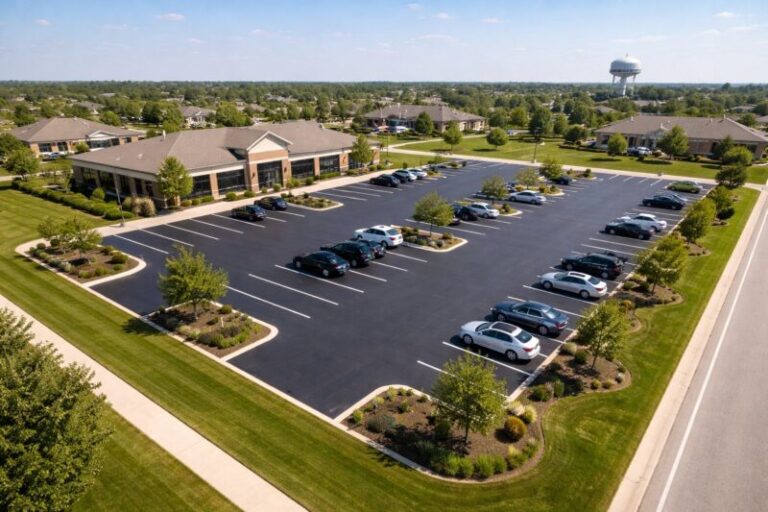
Getting three to five estimates is standard practice when selecting an asphalt paving contractor. But comparing bids requires more than just looking at the total price.
Create a simple comparison spreadsheet with these categories for each bid: base preparation method and depth, asphalt thickness and mix type, drainage solution, estimated timeline, warranty length and terms, insurance and bonding status, and total price. This side-by-side comparison makes it easy to spot where contractors differ and which differences justify higher or lower pricing.
Pay close attention to specifications, not just price. Two bids might be $5,000 apart, but if the lower bid specifies two inches of asphalt over four inches of base while the higher bid specifies three inches of asphalt over six inches of base, the higher bid is likely the better long-term value. That extra inch of asphalt and two inches of base can add years of service life.
Ask each contractor to explain their bid in person. A contractor who takes the time to walk you through every line item is demonstrating transparency and confidence in their work. A contractor who just emails a one-page estimate with a lump sum and no details is not giving you enough information to make an informed decision.
Knowing the red flags helps you eliminate unqualified contractors quickly. Watch for these warning signs during your evaluation process.
No physical office or local presence. A legitimate asphalt company in Indianapolis should have a verifiable business address, not just a cell phone number and a PO box. Drive-by contractors who show up after storms offering “great deals” on leftover material are among the most common sources of poor work in the paving industry.
Reluctance to provide references or proof of insurance. Any established contractor will have a portfolio of completed projects and current insurance documentation readily available. Hesitation or excuses when asked for these materials is a clear warning sign.
Demanding large upfront deposits. While a reasonable deposit (10 to 15 percent) for material procurement is standard on larger projects, a contractor asking for 50 percent or more upfront before any work begins is a risk. Structure payments around project milestones to protect yourself.
No written contract. Every aspect of your project should be documented in a written contract before work begins. This includes scope of work, materials, timeline, payment schedule, warranty terms, and procedures for change orders. A handshake deal offers you no protection if problems arise.
Pushing to pave in bad weather. Asphalt cannot be placed properly in rain or when temperatures are below 50 degrees Fahrenheit. In Indianapolis, this means the paving season typically runs from late April through early November. A contractor willing to pave outside these conditions is prioritizing their schedule over your project quality.
Choosing the right asphalt paving contractor in Indianapolis comes down to doing your homework before you commit. Verify licensing, insurance, and bonding. Evaluate local experience and past project quality. Compare detailed estimates on specifications, not just price. Ask about materials, equipment, crews, and long-term maintenance plans.
The time you invest in selecting the right contractor pays for itself many times over in the quality and longevity of your finished pavement. Indianapolis property owners who rush this decision or simply choose the cheapest option almost always spend more in the long run on repairs, resurfacing, and premature replacement.