Contact us for a Free Quote today

If you manage a commercial property in Indiana, you already know that winter takes a toll on your parking lot. But the real damage often happens quietly, one freeze-thaw cycle at a time. Understanding freeze-thaw damage asphalt surfaces face is the first step toward protecting your investment and avoiding costly repairs down the road.
Across Indianapolis, Carmel, Fishers, and surrounding areas, property owners deal with dozens of freeze-thaw cycles every winter. Each cycle weakens your pavement a little more, creating cracks, potholes, and structural failures that grow worse if left unaddressed. In this guide, we break down exactly how freeze-thaw cycles damage your pavement, what warning signs to look for, and what you can do to keep your parking lot in solid condition year after year.
A freeze-thaw cycle occurs when temperatures drop below 32°F at night and rise above freezing during the day. Water that has seeped into your pavement through tiny cracks and pores freezes overnight, expands, and then thaws again as temperatures climb. This repeated expansion and contraction puts enormous stress on asphalt surfaces.
Indiana’s climate makes this problem especially severe. The Indianapolis area typically experiences wide temperature swings during late fall, winter, and early spring. A single week in January or February can include multiple freeze-thaw cycles, with temperatures dropping into the teens at night and climbing into the 40s during the afternoon. This constant back-and-forth is what makes freeze-thaw damage one of the most common pavement problems in central Indiana.
The reason this matters for property owners is simple: every cycle causes incremental damage. A hairline crack that seems harmless in October can become a quarter-inch-wide gap by March. If water continues to infiltrate the base layers beneath your asphalt, the structural integrity of your entire parking lot is at risk.
Before freeze-thaw damage asphalt relies on water finding a way in. Even well-maintained asphalt is not completely waterproof. Over time, natural aging, UV exposure, and traffic wear create microscopic openings in the surface. Here are the most common entry points for water.
Small surface cracks are the primary culprit. These can develop from normal thermal expansion, heavy vehicle traffic, or simply the aging process of the asphalt binder. Even cracks that are barely visible to the naked eye can allow water to penetrate beneath the surface.
Poorly maintained joints and edges also invite water intrusion. Where your parking lot meets curbs, sidewalks, or building foundations, gaps can form over time. These transition zones are particularly vulnerable because they experience different rates of thermal movement.
Unsealed pavement is another major factor. If your parking lot has not been sealcoated in the last two to three years, the surface is more porous and absorbs water more readily. Sealcoating acts as a protective barrier that significantly reduces water infiltration.
Standing water from poor drainage is the final piece of the puzzle. If your lot has low spots, blocked drains, or insufficient grading, water pools on the surface and has more time to seep into the pavement. Proper drainage design is one of the most effective defenses against freeze-thaw damage.
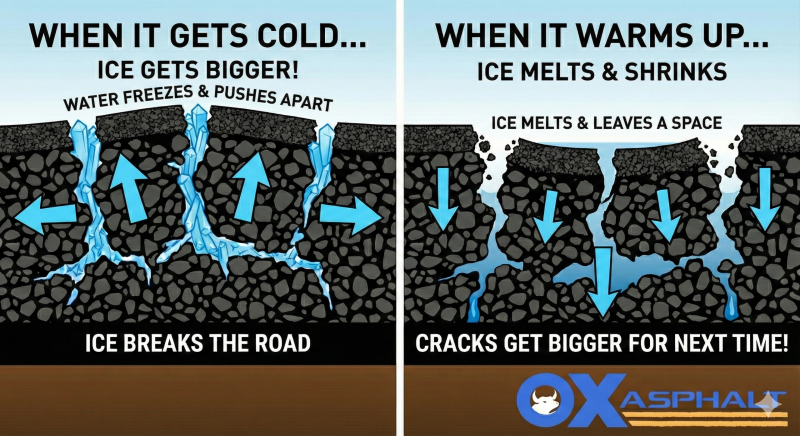
Understanding the mechanics of freeze-thaw damage asphalt undergoes helps you appreciate why early intervention is so important. Here is what happens inside your pavement during each cycle.
Step 1: Water Infiltration. Rain, melting snow, or runoff enters the pavement through cracks, pores, and unsealed surfaces. The water travels downward into the asphalt layers and can reach the aggregate base beneath.
Step 2: Freezing and Expansion. When temperatures drop below 32°F, the trapped water freezes. Water expands by roughly 9% when it turns to ice. This expansion creates internal pressure that pushes against the surrounding asphalt from the inside out.
Step 3: Crack Widening. The ice forces existing cracks to widen and deepen. It can also create entirely new fractures in areas that were previously intact. The frozen water essentially acts as a wedge, prying the pavement apart from within.
Step 4: Thawing and Settlement. When temperatures rise, the ice melts and the water either drains deeper into the base or evaporates. The expanded crack remains, now slightly larger than before. The pavement may settle unevenly as the void left by the melted ice collapses.
Step 5: Repeat. The next freeze-thaw cycle begins, and the now-larger cracks allow even more water to enter. Each cycle compounds the damage from the previous one, accelerating the deterioration of your pavement.
This is why freeze-thaw damage is often described as progressive. A parking lot that looked fine in November can develop serious problems by the time spring arrives, especially if the winter includes frequent temperature fluctuations.
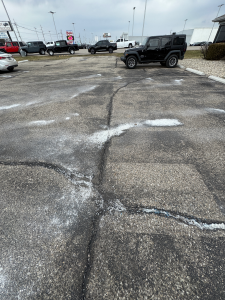
Freeze-thaw cycles produce several distinct types of pavement damage. Recognizing these patterns early allows you to address problems before they become expensive to repair.
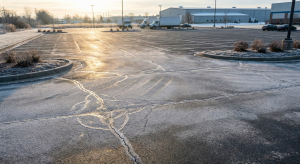
The most visible sign of freeze-thaw damage is surface cracking. Linear cracks that run across the pavement surface often start small but grow wider and deeper with each cycle. When multiple cracks interconnect, they form a pattern that resembles alligator skin. This alligator cracking is a clear indicator that freeze-thaw cycles have compromised the structural layers beneath the surface.
Surface cracks are more than a cosmetic issue. Every crack is an entry point for additional water, which means the damage accelerates over time. Addressing cracks early through professional crack sealing is one of the most cost-effective maintenance strategies available.
Potholes are the most frustrating and dangerous result of freeze-thaw damage asphalt owners face. They form when repeated freezing and thawing weakens the asphalt to the point where chunks of pavement break loose under vehicle traffic. The combination of ice expansion from below and tire pressure from above creates the perfect conditions for pothole formation.
In Indiana, pothole season typically peaks in late February and March, when the accumulated damage from winter freeze-thaw cycles combines with the increased moisture from early spring rain. Property owners in Greenwood, Noblesville, and throughout the Indianapolis metro area know this pattern all too well.
The most serious consequence of freeze-thaw damage asphalt can experience occurs below the surface. When water penetrates through the asphalt and reaches the aggregate base or subgrade soil, freezing can destabilize the entire foundation of your pavement. This leads to uneven settlement, depressions, and eventually structural failure.
Base failures are significantly more expensive to repair than surface damage because they require removing and rebuilding the affected sections from the ground up. This is why prevention and early intervention are so valuable.
In severe cases, the expansion of frozen water beneath the surface can actually push the pavement upward, creating humps or buckles in the surface. This heaving is especially common in areas with poor drainage or where the water table is close to the surface. Heaved pavement creates trip hazards for pedestrians and can damage vehicles that drive over the uneven surface.
Not every state deals with freeze-thaw damage asphalt endures to the same degree. Indiana’s geographic location and climate patterns create conditions that are particularly harsh on asphalt pavement.
Central Indiana sits in a climate zone where winter temperatures regularly oscillate around the freezing point. Unlike states farther north where temperatures stay consistently below freezing for weeks at a time, Indianapolis and surrounding communities experience frequent temperature swings. A stretch of days in the 40s followed by a plunge into the teens is common throughout December, January, and February.
This oscillation is the key factor. Pavement in consistently cold climates actually experiences fewer freeze-thaw cycles because the ground stays frozen for extended periods. In Indiana, the ground freezes, thaws, refreezes, and thaws again repeatedly throughout the winter season.
Indiana’s clay-heavy soils add another layer of vulnerability. Clay retains moisture and has poor drainage characteristics, which means water lingers in the subgrade longer than it would in sandy or gravelly soils. When that trapped moisture freezes, it causes more significant heaving and base disruption.
The Indiana Department of Transportation (INDOT) has noted that freeze-thaw cycling is one of the primary factors in pavement deterioration across the state highway system. The same forces that damage state highways are working on your commercial parking lot every winter.
The good news is that freeze-thaw damage asphalt surfaces sustain is largely preventable with proper maintenance. Here are the most effective strategies for protecting your commercial parking lot or driveway in Indiana.
Sealcoating is your pavement’s first line of defense against water infiltration. A quality sealcoat fills surface pores and creates a waterproof barrier that prevents moisture from reaching the layers below. For most commercial properties in the Indianapolis area, sealcoating every two to three years provides optimal protection. Check out our guide on how often to sealcoat your parking lot for detailed scheduling recommendations.
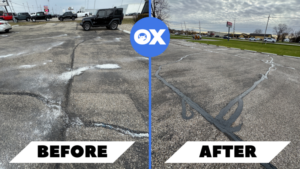
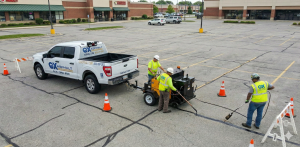
Sealing cracks before the first freeze of the season is one of the highest-ROI maintenance activities you can perform. Professional crack sealing uses hot-pour rubberized sealant that flexes with the pavement through temperature changes, keeping water out even as the crack moves. Our complete guide to asphalt crack sealing covers everything you need to know about the process.
The ideal time for crack sealing in Indiana is September through November, before temperatures consistently drop below freezing. Addressing cracks in the fall prevents water from entering the pavement and causing freeze-thaw damage throughout the winter.
Water that drains quickly off your pavement cannot freeze inside it. Make sure your parking lot’s drainage system is functioning properly by keeping catch basins clear of debris, ensuring the pavement surface is graded to direct water toward drains, and repairing any low spots where water tends to pool.
Property managers should conduct a drainage assessment at least twice a year, once in the spring and once in the fall. Identifying and correcting drainage issues before winter can prevent significant freeze-thaw damage.
When damage does occur, prompt repair limits further deterioration. A small pothole that is patched quickly prevents water from penetrating deeper into the base layers. Delaying repairs allows each subsequent freeze-thaw cycle to make the problem worse, turning a minor repair into a major reconstruction project.
Having a professional asphalt contractor inspect your parking lot at least once a year gives you a clear picture of your pavement’s condition. An experienced contractor can identify early signs of freeze-thaw damage that are not obvious to the untrained eye, including subtle base failures, drainage problems, and surface wear patterns that indicate trouble ahead. Our guide on winter parking lot maintenance covers the key warning signs to watch for.
Putting off pavement maintenance might seem like a way to save money in the short term, but the math tells a different story. Freeze-thaw damage asphalt experiences is progressive, which means the longer you wait to address it, the more expensive the eventual repair becomes.
Crack sealing a parking lot is a fraction of the cost of pothole repair. Pothole repair is a fraction of the cost of full-depth patching. And full-depth patching is a fraction of the cost of a complete mill-and-overlay or reconstruction. Every stage of deterioration that you skip past by delaying maintenance multiplies the final repair bill.
For commercial property owners in Indiana, the financial impact goes beyond repair costs. A parking lot filled with potholes and cracked pavement creates liability exposure for slip-and-fall or vehicle damage claims. It also affects the perception of your business, as customers and tenants notice when a property is not well maintained.
The most cost-effective approach is to invest in preventive maintenance, specifically sealcoating and crack sealing, on a regular schedule. These relatively modest investments extend the life of your pavement by years and prevent the kind of accelerated deterioration that freeze-thaw cycles cause.
Some freeze-thaw damage asphalt sustains can be monitored, but certain conditions call for immediate professional attention. Contact an asphalt contractor if you notice any of the following on your property.
Widespread alligator cracking across large sections of your parking lot suggests that the base layers have been compromised. This type of damage typically requires more than surface-level repair.
Potholes that reappear shortly after being patched indicate an underlying drainage or base problem that needs to be addressed at its source.
Significant heaving or settlement that creates uneven surfaces poses safety risks and signals serious structural issues below the pavement.
Standing water that does not drain within a few hours after rain means your drainage system needs attention before the next freeze-thaw cycle makes things worse.
If you are a property manager or business owner in Indianapolis, Carmel, Fishers, Greenwood, Noblesville, or anywhere in central Indiana, addressing these issues before winter sets in is the smart move. The cost of proactive maintenance is always less than the cost of emergency repairs.