Contact us for a Free Quote today

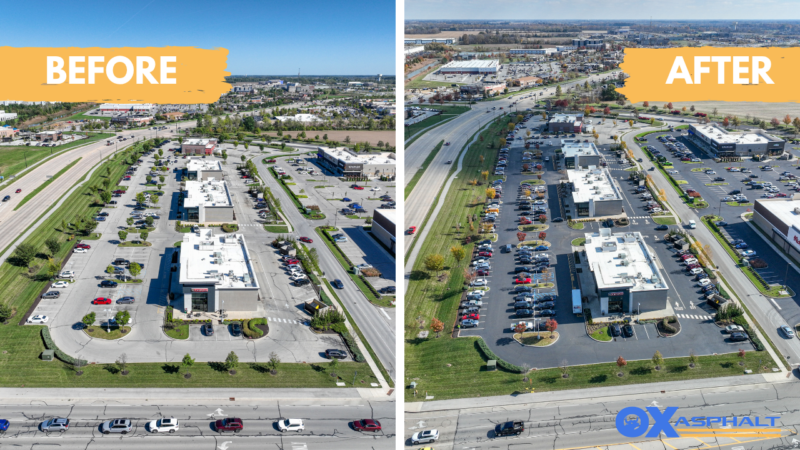
Winter in Indianapolis is unforgiving on asphalt surfaces. The constant cycle of freezing and thawing, combined with road salt, ice, and heavy snow loads, can turn minor pavement issues into major structural failures. The real damage often starts with problems that were already there.
If your parking lot has existing cracks, oxidation, or drainage issues heading into winter, the freeze-thaw cycle will accelerate deterioration exponentially. Water seeps into cracks, freezes, expands by nearly 10%, and breaks the pavement apart from the inside out. By spring, you could be looking at repairs that cost three to five times what preventive maintenance would have cost in the fall.
Catching these issues now, before the first hard freeze, can save you thousands in emergency repairs come spring.
Here are 5 warning signs that your parking lot needs attention before winter hits.
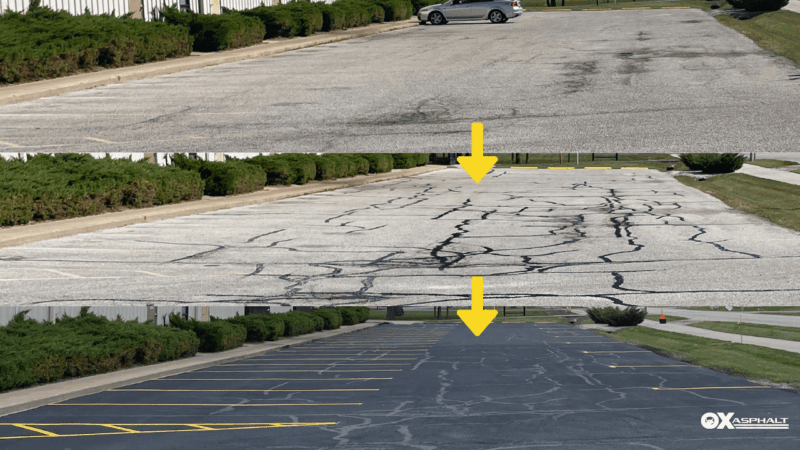
Cracks in asphalt are more than cosmetic issues. They are direct pathways for water infiltration, and water is what destroys parking lots in winter.
When water enters a crack and freezes, it expands and forces the crack wider. Each freeze-thaw cycle compounds this damage. A hairline crack in October can become a web of interconnected fractures by March, leading to base failure and costly reconstruction.
What to look for:
The fix: Crack filling seals out moisture before winter makes it worse. For alligator cracking, you may need patching or more extensive repairs to address the underlying base issues.
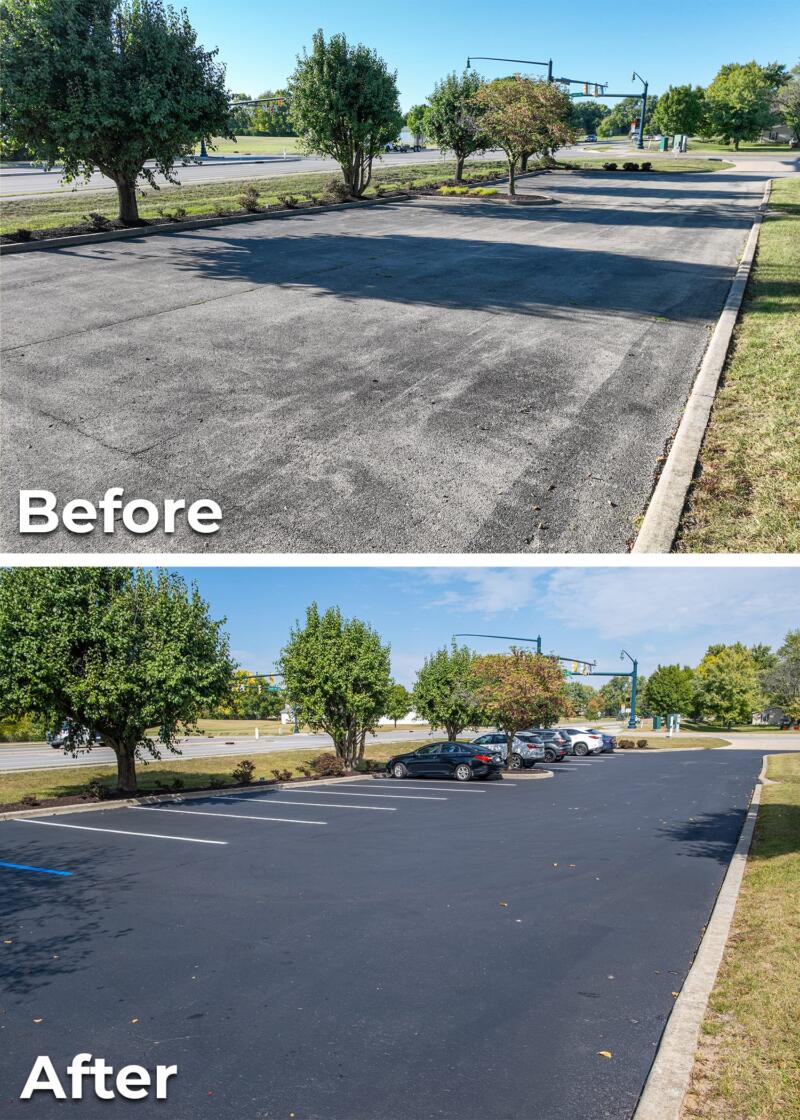
Fresh asphalt is deep black because it contains oils that keep it flexible and waterproof. When your lot looks gray or washed out, that color change signals a serious problem: the surface has oxidized and lost those protective oils.
Oxidized asphalt is brittle asphalt. It cannot flex under traffic loads or temperature changes the way healthy pavement does. Instead, it cracks. In winter, this brittleness becomes critical because the pavement cannot expand and contract with temperature swings. Cold temperatures make the problem worse by further reducing flexibility.
Beyond cracking, oxidized pavement is also porous. The tight seal that keeps water out has degraded, allowing moisture to penetrate the surface. This moisture then freezes, and the damage cycle accelerates.
What to look for:
The fix: Sealcoating restores the protective layer and replenishes surface oils. It creates a waterproof barrier that blocks moisture penetration and protects against UV damage, road salt, and oil drips. For commercial properties, sealcoating every 2-3 years is essential preventive maintenance that can extend your pavement’s life by 15-20 years.
Standing water on your parking lot is not just an inconvenience for customers. It is actively destroying your pavement and creating serious liability issues.
Water that sits on asphalt penetrates the surface through even microscopic openings. In winter, this trapped water freezes and creates ice patches that can last for days. More critically, the freeze-thaw cycle in these low spots causes localized heaving and cracking that spreads outward over time.
Pooling water also indicates that your lot’s drainage system or grading has failed. This is a structural issue that will only worsen with each season.
What to look for:
The fix: Drainage corrections through patching or infrared repair can eliminate low spots. For severe drainage issues, you may need to address the underlying base or install additional drainage infrastructure before freeze cycles turn these areas into major failures.
Oil stains on your parking lot are doing more damage than you might realize, and winter accelerates that damage significantly.
Motor oil, transmission fluid, and other petroleum products are solvents that break down the binder holding your asphalt together. Where you see an oil stain, the pavement beneath has been weakened and softened. These weakened areas cannot withstand the stress of freezing temperatures and heavy winter traffic loads.
When temperatures drop, the compromised pavement around oil stains becomes especially vulnerable. The softened binder freezes differently than healthy pavement, creating stress points that crack and crumble. Road salt compounds this damage by introducing additional chemical reactions.
What to look for:
The fix: For fresh stains, proper cleaning can limit damage. For areas where deterioration has begun, patching removes the compromised material and replaces it with sound pavement. Addressing these areas before winter prevents the damage from spreading during freeze-thaw cycles.
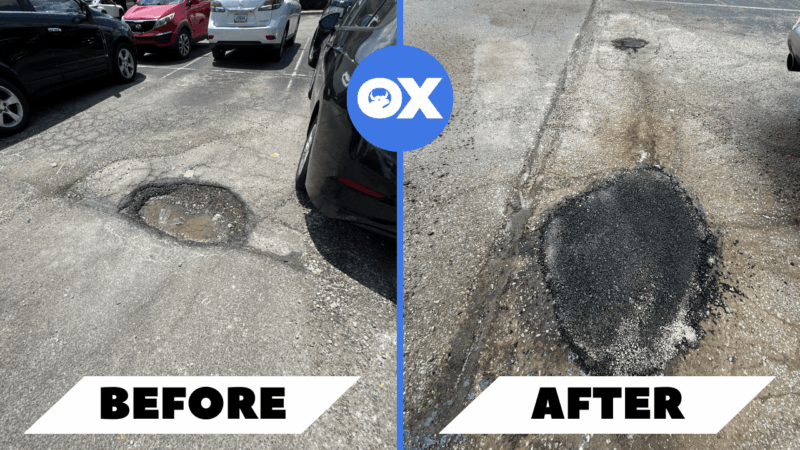
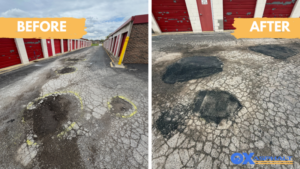
Small potholes and crumbling edges are warning signs that larger failures are coming, and winter will accelerate that timeline dramatically.
A pothole starts when water infiltrates the pavement, weakens the base material, and traffic loads cause the surface to collapse. Once that process begins, each freeze-thaw cycle makes the pothole larger. Water collects in the hole, freezes, expands, and breaks away more material. A fist-sized pothole in November can become a tire-damaging crater by February.
Crumbling edges along curbs and lot perimeters follow a similar pattern. Water infiltrates from the unprotected edge, freezes, and breaks away chunks of pavement. This edge failure then allows more water infiltration, accelerating the damage cycle.
What to look for:
The fix: Patching and edge repair now cost a fraction of what full reconstruction will cost next spring. Proper repair removes damaged material down to stable base, ensuring the repair holds through winter conditions.
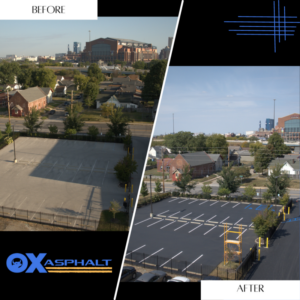
Addressing these 5 warning signs before winter hits is the smartest investment you can make in your property. The math is simple: repairs made now, when conditions are favorable for quality work, cost a fraction of emergency repairs made in spring after winter damage has compounded every existing issue.
More importantly, proactive maintenance keeps your parking lot safe for customers and employees throughout the winter season. Fewer potholes mean fewer liability concerns. Better drainage means fewer ice patches. A well-maintained lot reflects well on your business.