Contact us for a Free Quote today

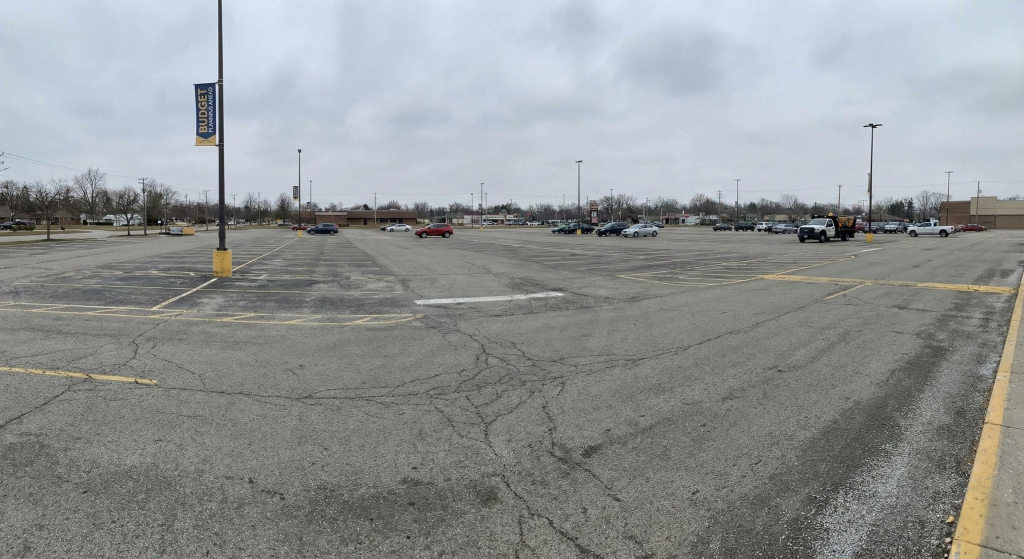
Spring is the most important season for your parking lot. After months of freezing temperatures, ice, snow, and salt, Indiana parking lots take a beating every winter. If you manage commercial property in Indianapolis, Carmel, Fishers, Greenwood, or anywhere in central Indiana, now is the time to put together a parking lot maintenance budget that protects your investment and keeps your property safe for customers and employees.
A well-planned parking lot maintenance budget does more than cover repairs. It helps you avoid emergency spending, extend the life of your asphalt, and maintain a professional appearance that reflects well on your business. In this guide, we break down exactly what to include in your spring maintenance budget, what each service typically costs, and how to prioritize spending so you get the most value out of every dollar.
Indiana winters are tough on asphalt. The constant cycle of freezing and thawing causes water to seep into small cracks, expand as it freezes, and break the pavement apart from the inside out. By the time March and April roll around, even well-maintained parking lots in the Indianapolis area show signs of wear.
Spring gives you the perfect window to assess the damage, plan your repairs, and schedule services before the busy summer season. Asphalt work requires warmer temperatures to perform properly, most sealcoating and crack filling products need sustained temperatures above 50°F to cure correctly. That makes the April-to-October window in Indiana your prime maintenance season.
Setting your parking lot maintenance budget in the spring also means you can lock in contractor availability. As temperatures rise, demand for asphalt services spikes across the Indianapolis metro area. Property managers who plan early get better scheduling options and often better pricing than those who wait until midsummer.
Before you set a single dollar in your budget, you need to know what you are working with. A detailed visual inspection is the foundation of any smart parking lot maintenance budget.
Walk your entire parking lot and look for these common issues:
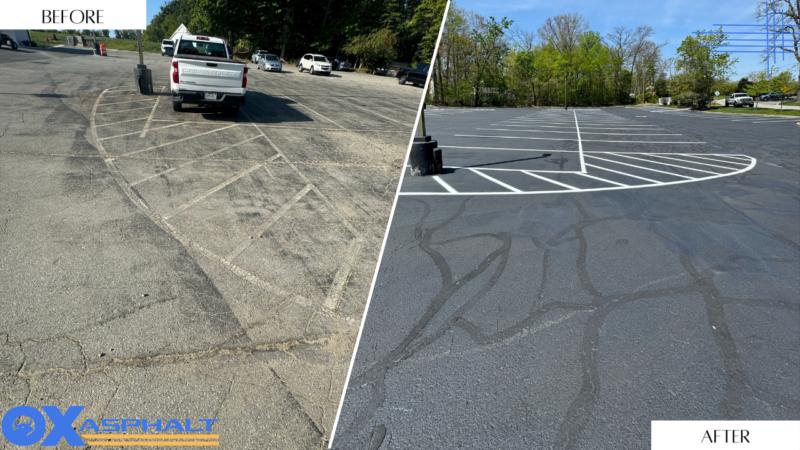
Cracks. Small cracks may look harmless, but they are the number one entry point for water damage. Linear cracks, alligator cracking, and edge cracking all require different repair approaches. If you are seeing widespread cracking, read our complete guide to asphalt crack sealing to understand what you are dealing with.
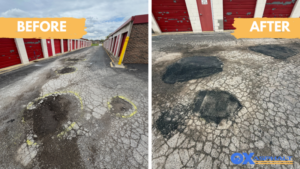
Potholes. Potholes form when water penetrates the asphalt surface and erodes the base material underneath. They are a safety hazard and a liability risk. Even small potholes will grow quickly if left unaddressed, especially during Indiana’s unpredictable spring weather.
Faded or missing line striping. Winter plowing and salt application wear down parking lot lines fast. Faded striping is not just an aesthetic issue, it creates confusion for drivers and can put you out of ADA compliance.
Drainage problems. Look for areas where water pools or does not drain properly. Standing water accelerates asphalt deterioration and can undermine the base layer of your parking lot over time.
Surface oxidation and wear. If your asphalt surface looks gray and dry instead of rich black, the binder is breaking down. This is a sign that sealcoating should be on your maintenance schedule.
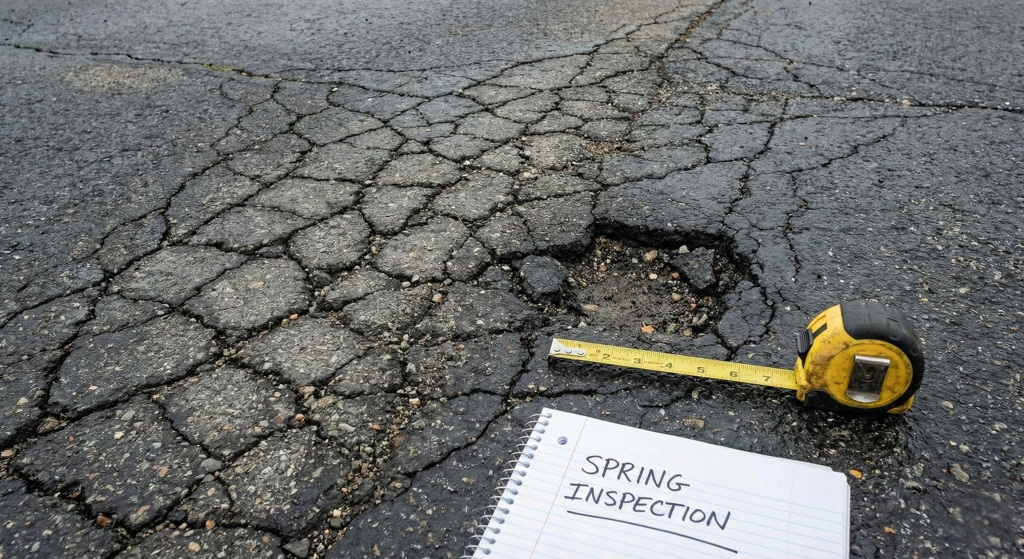
Document everything you find during your inspection. Take photos, note the approximate size of problem areas, and rank issues by severity. This gives you a clear picture of what needs immediate attention versus what can wait, which is essential for building a realistic parking lot maintenance budget.
Once you know the condition of your parking lot, the next step is understanding which services you need and what they typically cost. Here is a breakdown of the most common parking lot maintenance services that Indiana property managers should budget for each spring.
Crack sealing is one of the most cost-effective maintenance services you can invest in. It prevents water from penetrating the asphalt surface and causing further damage to the base layer. For Indiana parking lots that endure freeze-thaw cycles every winter, crack sealing is not optional, it is essential.
Crack sealing generally costs between $0.50 and $2.00 per linear foot, depending on the severity of the cracking and the size of your lot. A typical commercial parking lot in the Indianapolis area might need anywhere from a few hundred to a few thousand dollars in crack sealing work each spring.
If you want to understand why your asphalt cracks in the first place, that knowledge can help you make smarter long-term maintenance decisions and catch problems earlier.
Sealcoating adds a protective layer over your asphalt surface that shields it from UV rays, water, oil, and chemical damage. It also restores that fresh, dark appearance that makes your property look well-maintained and professional.
Most commercial parking lots should be sealcoated every two to three years. The cost for commercial sealcoating typically falls between $0.15 and $0.50 per square foot, depending on lot size, condition, and the type of sealer used. Larger lots generally come in at the lower end of that range per square foot, while smaller lots may have higher per-square-foot costs due to minimum charges.
For a deeper dive into sealcoating timing and frequency, check out our post on how often you should sealcoat your parking lot.
Potholes are more than just an eyesore. They are a trip-and-fall hazard, a vehicle damage risk, and a liability concern for any property owner or manager. The cost of pothole patching varies depending on the repair method and the extent of the damage.
Standard cold-patch repairs for small potholes are relatively inexpensive, while infrared asphalt repair, which creates a longer-lasting fix, costs more but delivers significantly better results. Budget anywhere from a few hundred dollars for minor patching to several thousand for extensive pothole repair across a larger lot.
The key takeaway for your parking lot maintenance budget: addressing potholes early is always cheaper than waiting. A small pothole that costs a couple hundred dollars to fix in April can become a major base failure that costs thousands by August.
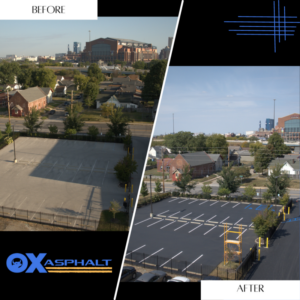
Fresh line striping does more than make your lot look sharp. It directs traffic flow, designates parking spaces, marks fire lanes, and ensures your ADA-accessible spaces meet federal requirements.
Line striping costs vary based on the size of your lot and the complexity of the layout. Most commercial lots in the Indianapolis area can expect to spend a few hundred to a couple thousand dollars on a full re-stripe. If you are sealcoating the same year, line striping is always done after the sealcoat cures, so plan for both services together.
Some property managers prefer to bundle all of their maintenance needs into a single parking lot maintenance program rather than scheduling individual services. This approach often saves money, simplifies scheduling, and ensures nothing falls through the cracks.
A comprehensive maintenance program typically includes annual inspections, crack sealing, sealcoating on the recommended cycle, pothole repairs as needed, and line striping. Bundling services with one trusted contractor can also help you negotiate better pricing and lock in priority scheduling.
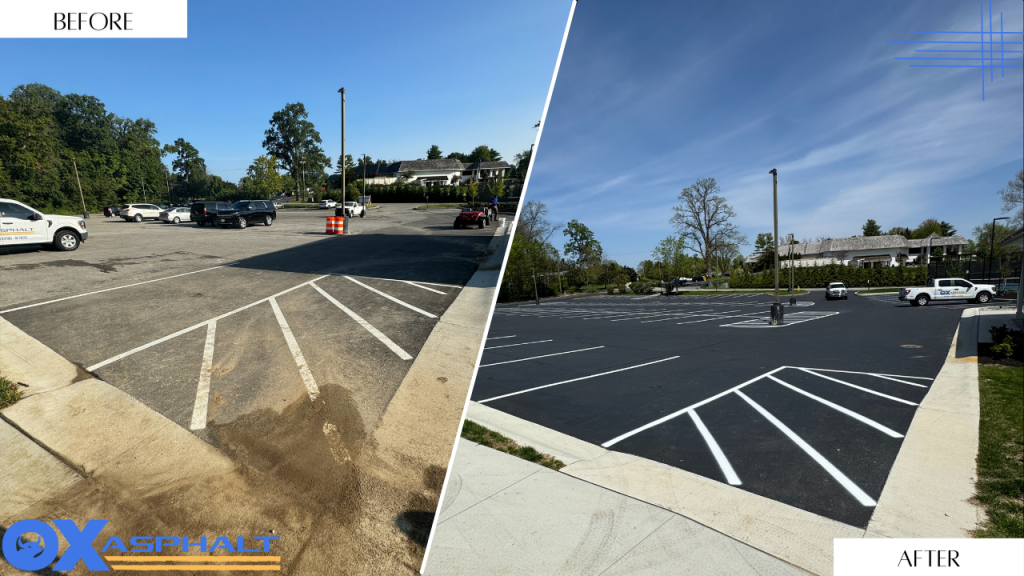
Not every parking lot issue needs to be addressed at the same time. One of the biggest mistakes property managers make is trying to do everything at once, blowing through their budget, and then having nothing left for unexpected problems later in the year.
Here is a practical framework for prioritizing your parking lot maintenance budget:
Address these first, no matter what. Potholes, large cracks that could trip pedestrians, faded ADA markings, and damaged curbing all create liability exposure. If someone gets hurt or a vehicle is damaged, the cost of a lawsuit or insurance claim will dwarf whatever you would have spent on repairs.
Crack sealing and drainage repairs fall into this category. Water is the single biggest threat to your asphalt. Every dollar you spend preventing water intrusion saves you multiple dollars in future repairs. If your budget is tight, crack sealing should be your top maintenance priority after safety fixes.
Sealcoating protects your asphalt from oxidation, UV damage, and chemical spills. It is not an emergency service, but skipping it for too many years will shorten your pavement’s lifespan significantly. If your lot has not been sealcoated in three or more years, move this up your priority list.
Line striping, signage updates, and cosmetic improvements are important but can often be scheduled later in the season if budget constraints require it. The exception is ADA compliance. If your accessible parking spaces, signage, or access aisles do not meet current requirements, treat this as a Priority 1 item.
The smartest approach to parking lot budgeting is thinking beyond just this spring. A multi-year maintenance plan maps out your expected needs over three to five years and spreads costs more evenly so you are never hit with a massive unexpected expense.
Here is how to build one:
Year 1 (Now): Complete your inspection, address all safety and water damage issues, and sealcoat if your lot is due. This is typically your highest-spend year because you are catching up on deferred maintenance.
Year 2: Budget for crack sealing (annual), any pothole repairs that develop over the year, and line striping touch-ups. If you sealcoated in Year 1, you should not need it again this year.
Year 3: Plan for another sealcoating cycle, continued crack sealing, and a full re-stripe. Start evaluating whether any sections of your lot are approaching the point where resurfacing makes more financial sense than continued patching.
Years 4-5: Continue the annual crack sealing and patching cycle. If your lot is aging, begin setting aside funds for a future overlay or reconstruction project. Having money earmarked years in advance makes these larger projects far less painful when the time comes.
Property managers in Indianapolis, Noblesville, and the surrounding areas who follow a multi-year plan consistently spend less on their parking lots over a ten-year period than those who take a reactive, fix-it-when-it-breaks approach.
Even experienced property managers make budgeting errors that cost them money. Here are the most common mistakes we see across commercial properties in central Indiana:
Waiting too long to address small problems. A hairline crack that costs very little to seal today can become a pothole that costs significantly more to repair in six months. The math always favors early intervention.
Skipping sealcoating to save money. Sealcoating is one of the least expensive maintenance services on a per-square-foot basis, but it delivers outsized protection. Skipping it to save money in the short term accelerates surface deterioration and leads to much larger expenses down the road.
Not accounting for Indiana weather. Central Indiana gets everything: extreme cold, summer heat, heavy rain, and freeze-thaw cycles that can number in the dozens each winter. Your budget needs to reflect the reality that our climate is harder on asphalt than many other parts of the country.
Ignoring drainage issues. Poor drainage is a silent killer for parking lots. If water is pooling on your surface, it is working its way into the base layer every time it rains. Fixing drainage problems might not be glamorous, but it is one of the highest-ROI items you can put in your parking lot maintenance budget.
Choosing the cheapest contractor. Price matters, but quality of work matters more. A poorly done sealcoat or crack seal can actually do more harm than good. Look for contractors with a track record of quality work on commercial properties in the Indianapolis area.
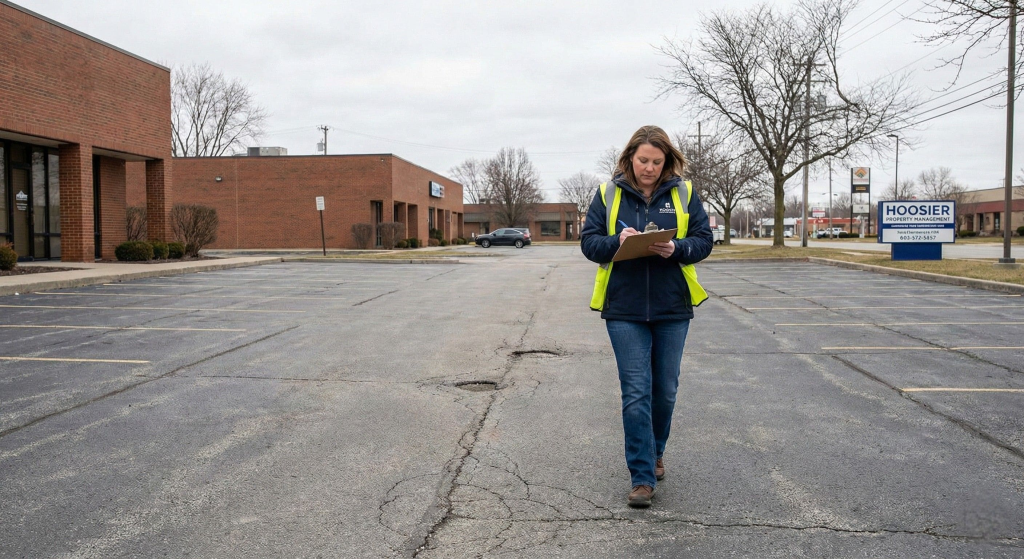
Your parking lot maintenance budget is only as good as the contractor who executes the work. Here are the key things to evaluate when choosing a partner for your commercial parking lot maintenance in Indiana:
Experience with commercial properties. Residential driveway work and commercial parking lot maintenance require different equipment, materials, and expertise. Make sure your contractor regularly handles lots comparable in size and complexity to yours.
Full-service capabilities. Working with a single contractor who can handle crack sealing, sealcoating, pothole repair, line striping, and asphalt repairs simplifies your life and often reduces your total cost compared to hiring multiple specialists.
Local knowledge. A contractor who understands Indiana’s climate, soil conditions, and seasonal patterns will make better recommendations for your property. They know when to schedule work for optimal results and what issues are most common in our area.
Transparent pricing. Your contractor should be willing to walk your lot with you, explain what they recommend and why, and provide a clear written estimate before any work begins. No surprises.
References and reputation. Ask for references from other commercial property managers in the Indianapolis metro area. Check online reviews. A contractor’s reputation in the local market tells you a lot about what you can expect.
A proactive parking lot maintenance budget is one of the smartest investments you can make as a commercial property owner or manager in Indiana. By inspecting your lot early, understanding what services you need, prioritizing your spending, and working with a trusted local contractor, you can protect your pavement, reduce long-term costs, and keep your property looking professional year-round.
If you have already noticed signs that your parking lot needs maintenance, do not wait for the damage to get worse. Spring is the time to act, and having a clear budget in place makes the process simple and stress-free.
Ox Asphalt provides full-service parking lot maintenance for commercial properties across Indianapolis, Carmel, Fishers, Noblesville, Greenwood, and all of central Indiana. Whether you need crack sealing, sealcoating, pothole repair, line striping, or a complete maintenance plan, we are here to help you protect your investment and get the most out of your parking lot maintenance budget.