Contact us for a Free Quote today

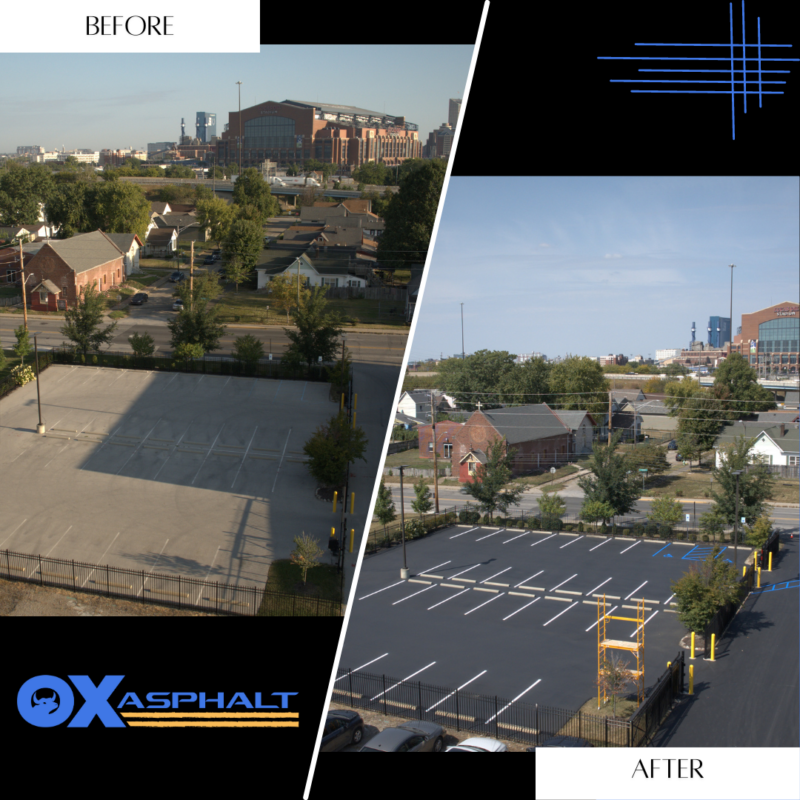
Your parking lot is the first thing customers see when they arrive at your business. Faded lines, confusing layouts, and missing markings send the wrong message before anyone walks through the door.
Professional parking lot line striping keeps your property organized, safe, and compliant with local regulations across Indiana. Whether you manage a retail center in Carmel, an office complex in downtown Indianapolis, or a warehouse in Greenwood, clear pavement markings are essential to daily operations.
In this guide, we cover everything Indianapolis-area property owners and managers need to know about parking lot line striping, from material choices and layout planning to ADA compliance and maintenance schedules.
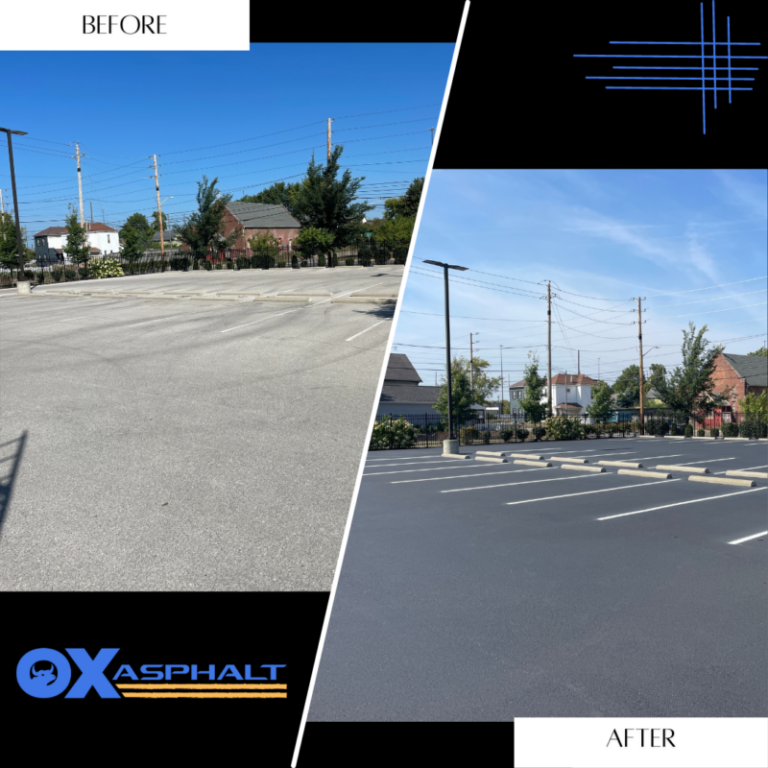
Clear, well-maintained parking lot markings do more than just look good. They serve a critical function for safety, traffic flow, and legal compliance.
Every vehicle that enters your lot needs guidance. Without visible lines, drivers improvise. They park at odd angles, block fire lanes, and create bottlenecks that frustrate customers. For businesses in high-traffic areas like Fishers or Noblesville, a disorganized lot during peak hours can mean lost revenue.
Fresh striping also signals that you take your property seriously. A well-marked lot tells visitors that you maintain your facility and care about their experience. On the other hand, a faded, patchy lot raises questions about what else you might be neglecting.
From a liability standpoint, proper markings reduce the risk of accidents on your property. Clearly defined driving lanes, pedestrian crosswalks, and stop bars help prevent collisions and protect you from potential lawsuits. Indiana property owners have a responsibility to maintain reasonably safe conditions for visitors, and visible pavement markings are a key part of that obligation.
Not all striping paint is the same. The material you choose affects durability, visibility, dry time, and cost. Here is a breakdown of the most common options used across Indianapolis-area properties.
Water-based latex paint is the most widely used option for parking lot line striping in Indiana. It is affordable, easy to apply, and dries relatively quickly. Most commercial properties use water-based paint for standard stall lines, directional arrows, and lot numbering.
The trade-off is durability. In high-traffic lots, water-based paint may need reapplication every 12 to 18 months. Indiana’s freeze-thaw cycles, road salt, and snowplow activity accelerate wear, especially in lots that see heavy winter traffic.
Thermoplastic is a heat-applied material that bonds directly to the asphalt surface. It is significantly more durable than paint and can last three to five years or longer in moderate-traffic conditions.
You will typically see thermoplastic used for crosswalks, stop bars, and high-wear areas where repainting every year is impractical. The upfront cost is higher, but the longer lifespan often makes it more cost-effective over time for Indianapolis properties with heavy daily use.
Epoxy coatings offer excellent adhesion and chemical resistance. They work well in environments where oil, fuel, and degreasing agents are common, such as automotive shops, gas stations, and industrial facilities.
Epoxy requires more preparation and longer cure times than standard traffic paint, so it is typically reserved for specialty applications rather than full-lot striping.
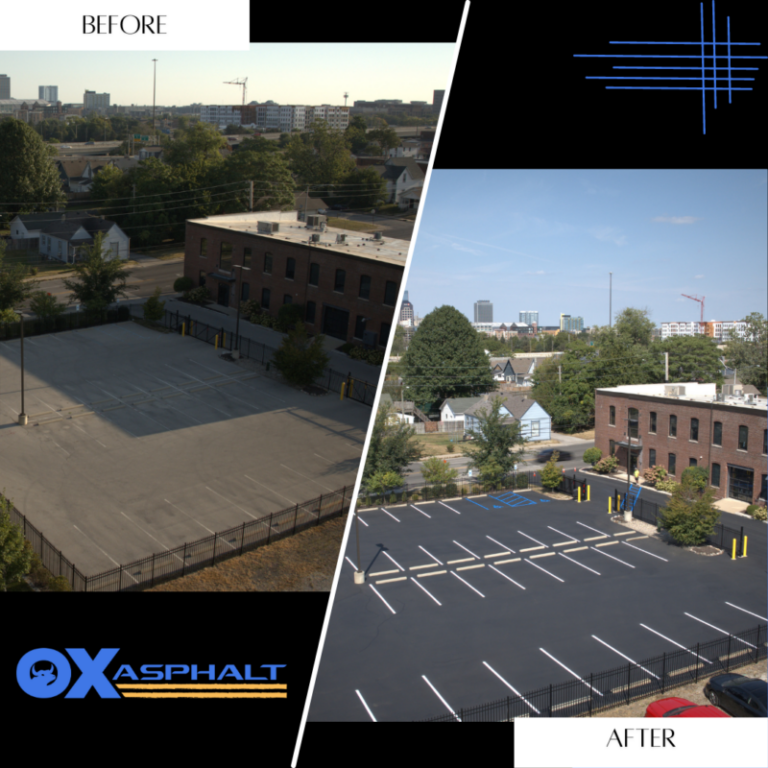
A good striping layout maximizes your available space while keeping traffic flowing safely. Rushing into a repaint without reviewing your layout is a missed opportunity.
Start by walking your lot and noting problem areas. Are there spots where drivers consistently park crooked? Is there a bottleneck at the entrance or exit? Do delivery trucks have enough room to maneuver without crossing into customer parking areas?
For properties in growing areas like Westfield and Zionsville, traffic patterns may have changed since the lot was originally designed. A layout review before restriping can help you reconfigure spaces to match current demand.
Standard parking stalls in Indiana are typically 9 feet wide by 18 feet long for 90-degree perpendicular parking. Angled stalls (usually 60 or 45 degrees) require less aisle width and can improve traffic flow in lots with one-way lanes.
Compact spaces are narrower, usually around 8 feet wide, and are common in urban lots in downtown Indianapolis where maximizing capacity is a priority. However, using too many compact spaces can frustrate drivers and increase door-ding complaints.
Your layout must account for fire lane access, loading zones, and no-parking areas. Indiana fire codes require that fire lanes remain clear and visibly marked at all times. Red curb paint or “No Parking, Fire Lane” stencils are standard.
Loading zones near entrances help delivery drivers and reduce double-parking in driving lanes. Marking these clearly with yellow curb paint and stenciled text keeps operations smooth.
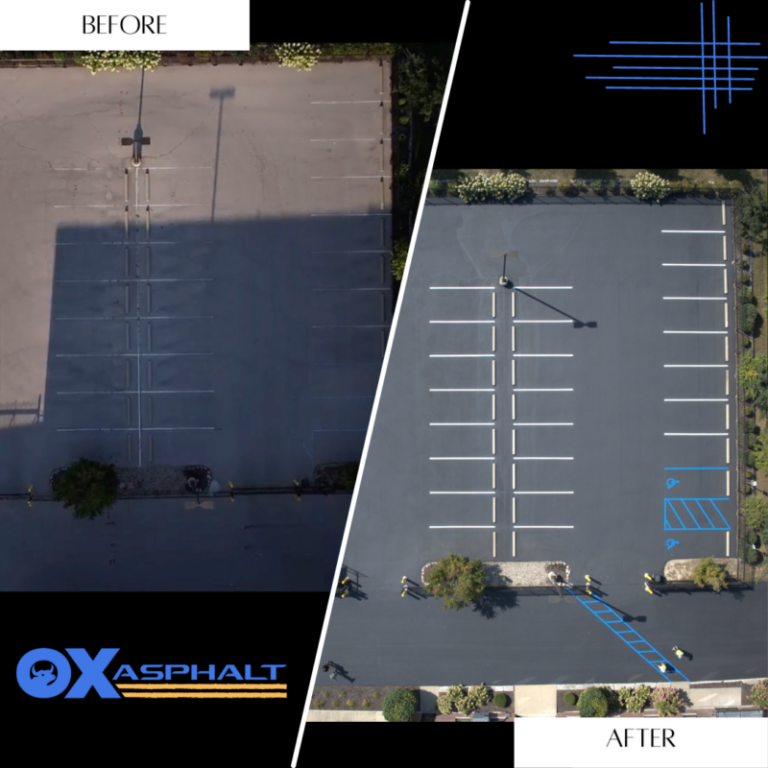
ADA compliance is not optional. Federal and state regulations require specific numbers and dimensions for accessible parking spaces, and the penalties for non-compliance can be significant.
The Americans with Disabilities Act sets clear requirements for accessible parking in commercial lots.
The number of required accessible spaces depends on your total lot capacity. A lot with 1 to 25 total spaces needs at least one accessible space. Lots with 26 to 50 spaces need two. The count scales up from there, and at least one in every six accessible spaces must be van-accessible with a wider access aisle.
Accessible spaces must be at least 8 feet wide with a 5-foot access aisle. Van-accessible spaces require an 8-foot access aisle. All spaces need the International Symbol of Accessibility on both the pavement surface and an upright sign.
For a deeper look at Indiana-specific ADA requirements, check out our full guide on ADA parking lot compliance requirements.
Getting these markings right during your line striping project saves you from costly corrections and potential legal action down the road.
Timing matters for line striping. Indiana’s climate creates a defined window for optimal application.
The ideal striping season in Indianapolis runs from late April through October. Pavement temperatures need to be at least 50 degrees Fahrenheit for most traffic paints to adhere properly, and you need a dry surface with no rain in the forecast for at least 24 hours after application.
Spring is a popular time for restriping because it follows the winter months that cause the most damage. After months of snowplows, salt, and freeze-thaw cycles, your existing lines are often significantly faded.
For most commercial properties in the Indianapolis area, restriping every 18 to 24 months keeps lines visible and compliant. High-traffic lots, such as grocery stores, medical offices, and retail plazas, may need annual touch-ups.
Factors that accelerate fading include heavy traffic volume, winter salt and plow activity, UV exposure, and the condition of the underlying asphalt. If your lot surface is cracked or deteriorating, addressing those issues with professional crack sealing before striping will help the new markings last longer.
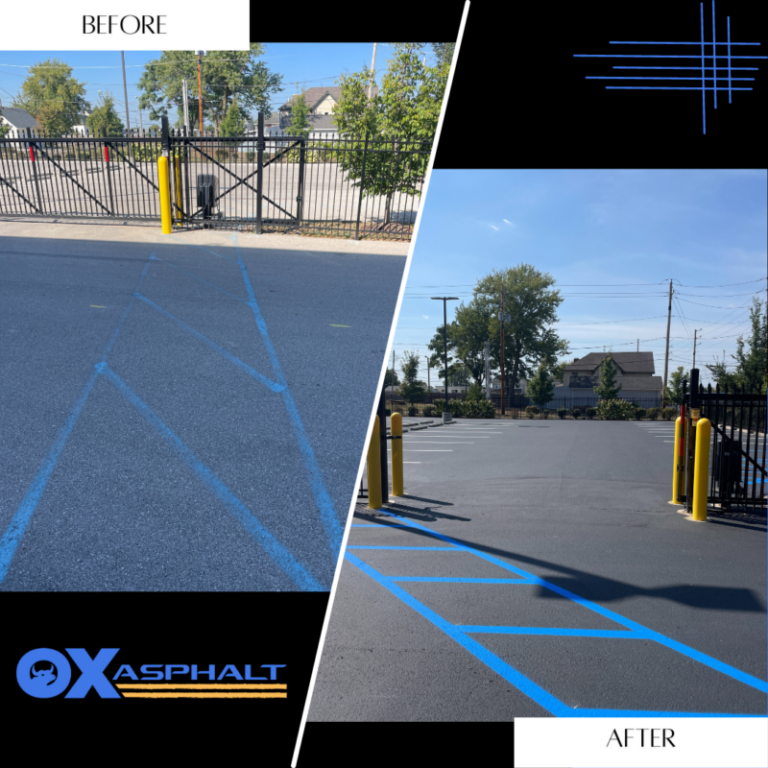
Understanding the process helps you plan around business operations and minimize disruption.
The asphalt surface must be clean and dry before any paint is applied. This means sweeping or blowing debris, removing dirt buildup, and ensuring there is no standing water. If the lot has been recently sealcoated, the sealcoat needs to cure fully before striping can begin.
For lots with heavy oil staining, problem areas may need spot treatment or primer to ensure proper paint adhesion.
Before paint hits the pavement, the crew measures and chalk-lines the entire layout. This step ensures consistent stall widths, straight lines, and properly spaced ADA markings. If you are making layout changes, this is when new configurations get mapped out on the ground.
Professional striping machines apply paint at a consistent width and thickness for uniform results. Hand work is used for stencils, symbols, arrows, and detail areas like crosswalk hatching and “STOP” text.
A skilled crew can stripe a standard 100-space parking lot in a single day. Larger lots or lots requiring layout changes may take two days. The paint typically dries enough for light traffic within 30 minutes, but full cure time is 24 hours.
During the striping process, sections of the lot will be barricaded to prevent vehicles from driving over wet paint. Planning for this ahead of time, especially for businesses that cannot close entirely, helps keep operations running while the work gets done.
A complete striping project includes more than just parking stall lines. Here are the additional markings that most commercial lots in Indianapolis need.
Directional arrows guide one-way traffic flow and prevent head-on conflicts in driving lanes. Crosswalks mark pedestrian paths between parking areas and building entrances for safety. Stop bars indicate where vehicles should stop at intersections and before entering main driving lanes.
Speed bumps and speed limit text remind drivers to slow down in lots with pedestrian activity. Reserved space markings designate spots for employee parking, visitor parking, or curbside pickup. Curb painting in red for fire lanes, yellow for no-parking zones, and blue for ADA spaces rounds out the standard marking package.
Each of these elements plays a role in keeping your lot safe and organized. Missing or faded markings create confusion and increase liability exposure.
Line striping is not a standalone task. It is one piece of a comprehensive parking lot maintenance strategy that includes crack repair, sealcoating, drainage management, and surface patching.
The best approach is to coordinate striping with your other maintenance activities. For example, if your lot needs crack sealing and sealcoating this spring, schedule the striping as the final step after the sealcoat has cured. This ensures your new lines go down on a clean, sealed surface and last as long as possible.
Property managers who build striping into their annual maintenance budget avoid the sticker shock of deferred work piling up. A proactive schedule keeps your lot looking professional year-round and prevents small issues from becoming expensive problems.
Not every paving company handles striping, and not every striping company understands the full picture of lot maintenance. When choosing a contractor for your Indianapolis-area property, look for a few key qualities.
Experience with commercial properties is essential. Commercial lots have different requirements than residential driveways, including ADA compliance, fire lane regulations, and high-traffic durability needs. Ask for references from similar properties in Indiana.
A good contractor will walk your lot with you before providing a quote. They should identify problem areas, recommend layout improvements, and explain the material options that fit your budget and traffic levels.
Look for a company that handles the full scope of asphalt services, including paving, crack sealing, sealcoating, and striping. Working with a single contractor for all your lot maintenance simplifies scheduling and ensures each service is coordinated properly.
At Ox Asphalt, we provide professional parking lot line striping for commercial properties throughout Indianapolis, Carmel, Fishers, Noblesville, Greenwood, and surrounding areas. Our crews handle everything from standard restriping to full layout redesigns, all built on a foundation of quality asphalt work.
Parking lot line striping is one of the most visible, cost-effective improvements you can make to your commercial property. Fresh markings improve safety, support ADA compliance, and create a better first impression for every customer who pulls into your lot.
If your parking lot in Indianapolis or surrounding Indiana communities needs restriping, a layout update, or a full marking package, Ox Asphalt is here to help. We bring the equipment, materials, and experience to get the job done right.