Contact us for a Free Quote today

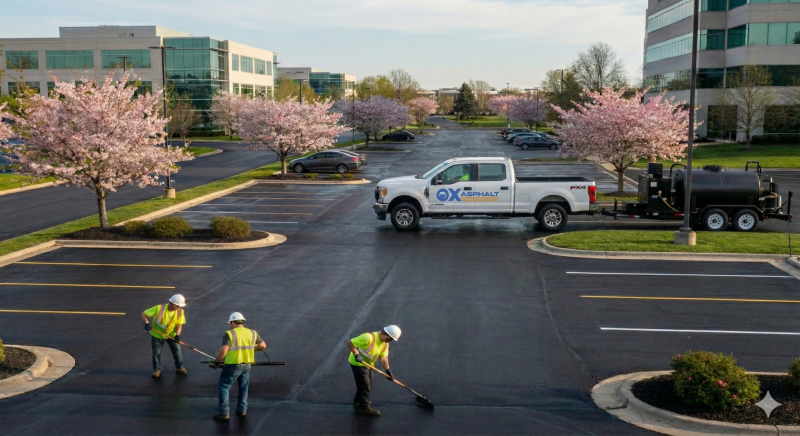
Spring is the most important window of the year for commercial asphalt maintenance in Indiana. After months of freeze-thaw cycles, road salt, snowplow traffic, and UV exposure, your parking lot has taken a beating. Spring sealcoating is one of the most cost-effective steps you can take to restore that protection, stop existing damage in its tracks, and extend the life of your pavement before summer heat and traffic push it further toward failure.
Whether you manage a strip mall in Carmel, an office complex in Fishers, a warehouse property on the east side of Indianapolis, or a retail center in Greenwood, this guide covers exactly what you need to know to approach spring sealcoating the right way. Follow these best practices, and your commercial parking lot will be in strong shape heading into the busiest months of the year.
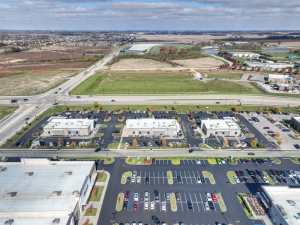
Not every season is created equal when it comes to sealcoating, and spring stands out as the single best time to get this work done on your commercial property. There are several practical reasons for this.
Temperature and curing conditions. Sealcoat requires air and surface temperatures above 50 degrees Fahrenheit to cure properly, with 60 degrees or higher being ideal. It also needs low humidity and no rain in the forecast for 24 to 48 hours after application. Indiana spring weather, typically from late April through early June, delivers those conditions more reliably than summer, which can bring sudden thunderstorms, high humidity, and extreme heat that interfere with proper curing.
Getting ahead of the damage curve. Winter in Indiana is hard on asphalt. The freeze-thaw cycle, where water infiltrates existing cracks, freezes, expands, and thaws repeatedly, widens cracks and loosens the asphalt matrix. Road salt accelerates oxidation. Snowplow blades chip and scar surfaces. By the time spring arrives, any damage that formed over winter is fresh and visible. Addressing it early, with crack sealing and sealcoating, prevents that damage from compounding through another season of traffic and heat.
Contractor availability and scheduling. Spring sealcoating demand ramps up quickly, but scheduling in April and May is typically easier than waiting until June or July when most commercial contractors are booked several weeks out. Getting on the calendar early gives you more flexibility on timing and may allow you to coordinate around your business operations more conveniently.
Maximum protection before peak traffic season. Most commercial parking lots see their heaviest traffic loads from late spring through early fall. Getting sealcoat down before that window means your pavement is fully protected when it needs to be most.
No reputable commercial sealcoating contractor should show up with equipment without first walking your property. A pre-project inspection is a standard, necessary part of any professional sealcoating job, and you should expect it.
During a proper inspection, a qualified contractor will evaluate the overall condition of your pavement, identify areas of cracking or deterioration, look for pooling water or drainage issues, and flag any surface contamination like oil or fuel stains that need to be cleaned before sealcoat can adhere properly.
If you have cracks wider than a quarter inch, areas of alligator cracking (that web-like pattern of interconnected cracks that indicates structural failure below the surface), or potholes, those need to be addressed before sealcoat goes down. Sealcoating is a protective coating for sound pavement, not a filler for damaged pavement. A contractor who skips the inspection or is willing to seal over visible damage is not doing you any favors.
Before you call a contractor, do your own walkthrough. You do not need to be an asphalt professional to spot the warning signs. Walk the entire lot, look for cracks that have widened over winter, areas where the surface looks faded or has turned gray (a sign of oxidation), and any spots where the asphalt feels soft or spongy underfoot.
Take photos of everything that looks off. When you contact a sealcoating company, those photos help the estimator understand the scope of the project before they arrive, and they may catch issues you did not notice. For commercial properties in Noblesville and Greenwood, where lower-lying lot designs are common, pay extra attention to low spots and transitions where water tends to settle, since these areas accumulate damage faster.
This step also helps you have an informed conversation with your contractor. You will know what to ask about, you will be less likely to be surprised by additional repair costs, and you will be in a better position to evaluate whether the contractor’s inspection matches what you saw on your own walkthrough.
This is the most critical step in the entire spring sealcoating process, and it is also where the most shortcuts are taken. Cracks, potholes, and deteriorated areas must be repaired before sealcoat is applied. This is not optional.
Cracks up to about a quarter inch in width can typically be cleaned with compressed air or a wire brush and filled with a hot-applied or rubberized crack sealant. Cracks wider than that, or areas where multiple cracks have merged into a pattern, usually require more substantial treatment. Potholes need to be cut out, properly patched, and compacted before sealcoating proceeds.
Applying sealcoat over open cracks or damaged pavement traps moisture beneath the sealed surface. That trapped moisture has nowhere to go, and when temperatures drop again next winter, it freezes, expands, and accelerates the very damage you were trying to stop. For a detailed look at crack treatment options, read our full guide to asphalt crack sealing in Indianapolis.
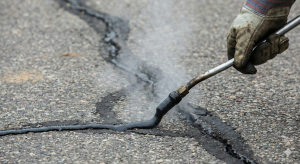
Weather timing is one of the biggest variables in spring sealcoating, and it deserves serious attention. Sealcoat must be applied to a dry surface, at air temperatures above 50 degrees Fahrenheit, with no rain expected for a minimum of 24 hours after application. The surface temperature of the asphalt also matters, since blacktop can be significantly hotter than the surrounding air on sunny days.
In Indiana, spring weather is notoriously unpredictable. A stretch of warm, dry days in late April can give way to cold rain within 24 hours. Late-season frost events are not unusual in early May, particularly in northern Indianapolis suburbs like Zionsville and Westfield. A qualified contractor will monitor forecasts closely leading up to your scheduled project and communicate proactively about any needed rescheduling.
If a contractor is pushing to complete your sealcoating job during marginal weather conditions because their schedule is tight, that is a warning sign. Sealcoat applied during cold or wet conditions cures poorly, resulting in a weak, patchy surface that wears off quickly and fails to protect the pavement underneath.
For commercial properties, sealcoating logistics go beyond just the asphalt. Your parking lot serves customers, tenants, employees, and delivery vehicles every day, and closing it entirely, even for a day, can be disruptive and costly.
Most professional commercial sealcoating contractors in the Indianapolis area work in phases, sealing one section of the lot at a time while leaving the rest accessible. This approach keeps your business operational throughout the project while still allowing the work to be completed efficiently.
Before your project begins, map out which sections are most critical to keep open, identify delivery schedules and time-sensitive access needs, confirm fire lane access requirements, and communicate with any tenants or neighboring businesses who share the lot. Providing 48 to 72 hours of advance notice to your tenants or staff avoids the friction of a surprise closure.
Some commercial property managers prefer weekend or evening scheduling to eliminate disruption entirely. Most established sealcoating companies in Indiana can accommodate this, though it may carry a premium in pricing. Evaluate the tradeoff between convenience and cost based on your specific situation.
Not all sealcoat products are the same, and the right choice depends on your pavement type, traffic load, and what types of vehicles and substances your lot is regularly exposed to.
The two most common commercial sealcoat products used in Indiana are coal tar emulsion and asphalt emulsion. Coal tar emulsion provides strong resistance to fuel, oil, and chemical spills, making it a popular choice for gas stations, auto service centers, and high-traffic commercial lots. Asphalt emulsion is a more environmentally considerate option that works well for office parks, retail centers, and mixed-use properties where chemical exposure is limited.
The Pavement Coatings Technology Council provides technical guidance on sealcoat products and their appropriate applications, which is a useful reference if you want to understand the performance differences in more depth.
Your contractor should explain what product they use and why it fits your property needs. A contractor who does not differentiate between product types or who uses the same formulation on every job regardless of site conditions is not giving your property the attention it deserves.
A single coat of sealcoat does provide some protection, but two coats is the industry standard for commercial applications, and for good reason.
The first coat penetrates the surface and seals minor surface voids and irregularities in the pavement texture. Once it cures, the second coat creates a uniform, consistent protective barrier across the entire surface. Two coats produce better resistance to UV oxidation and water infiltration, a more uniform finished appearance, and a longer service life between sealcoating cycles.
Some contractors will apply one thinned-out coat in an attempt to cover more square footage per job and stretch their material. The result is uneven color, poor durability, and early wear, especially in high-traffic areas like drive lanes and entry points. When getting quotes, ask specifically whether the price includes one coat or two.
For context on how two-coat applications affect your maintenance cycle, check out our breakdown of how often commercial properties should sealcoat their parking lot.
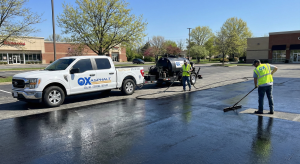
Spring sealcoating on a commercial property is a different scope of work than a residential driveway job. Large parking lots require professional-grade spray and squeegee equipment, traffic management planning, phased scheduling, and experience managing the variables that come with full commercial operations. Make sure you are working with a contractor who has that track record.
Ask for references from other commercial property managers in the Indianapolis metro area. Look for a company that carries adequate general liability and workers compensation insurance, provides a written scope of work before starting, uses professional equipment, and is transparent about what products they use and how they apply them.
Be cautious of very low bids. A bid that is significantly below the others you receive is usually reflecting something: thinner coats, lower-grade materials, skipped preparation steps, or a contractor without proper insurance. The lowest price in sealcoating is rarely the best value.
Ox Asphalt has worked with commercial property owners and managers across Indianapolis, Carmel, Fishers, Noblesville, Greenwood, and throughout central Indiana. We have the equipment and experience to handle projects of all sizes, and we work around your schedule to minimize disruption to your business.
Starting too early in the season. The eagerness to get maintenance done after a long Indiana winter is understandable, but applying sealcoat before temperatures are consistently above 50 degrees is a costly mistake. Sealcoat applied in cold conditions cures improperly, leading to a brittle, weak surface that peels and wears off within a season. Wait for consistent warmth, even if it means pushing your project to May.
Skipping crack sealing to save money. This one shows up on job sites more often than it should. The logic is usually that sealcoating will cover the cracks anyway, so why pay for separate crack treatment? The result is consistently the same: moisture trapped under the sealed surface, accelerated base damage, and premature pavement failure. Crack sealing before sealcoating is not optional, it is part of the job.
Choosing contractors solely on price. Commercial parking lot sealcoating is a competitive market, and getting three or four quotes is smart. But the selection should come down to scope of work, experience, product quality, and references, not the lowest number on a quote sheet. A job done at rock-bottom pricing is almost always a job done without the preparation, materials, or coats it actually requires.
Failing to communicate with tenants and customers. An unannounced parking lot closure is disruptive and creates unnecessary friction with the people your property serves. Provide advance notice, post signage, and where possible, designate temporary overflow parking. A small investment in communication goes a long way.
Neglecting maintenance between sealcoating cycles. Sealcoating is not a one-time fix. It needs to be reapplied on a regular schedule, typically every two to three years for most commercial lots, and crack sealing should be performed between applications to address any new cracking that develops. For a comprehensive look at what to watch for between annual maintenance cycles, read our guide on the 5 signs your parking lot needs maintenance.
Commercial asphalt is a significant capital investment. A full parking lot repave for a mid-sized commercial property in Indiana, depending on size, site conditions, and current asphalt thickness, can represent a substantial expense. The goal of a proactive maintenance plan, with spring sealcoating at its center, is to delay that expense as long as possible while keeping your lot safe, functional, and professional-looking for customers and tenants.
Without protection, asphalt oxidizes as UV rays break down the binding agents in the pavement. The surface becomes brittle, gray, and prone to cracking. Once cracks form, water finds a path into the base. The base softens, loses its load-bearing capacity, and eventually the pavement fails structurally. At that point, no amount of sealcoating or crack sealing can reverse the damage.
Sealcoating creates a protective barrier that slows UV oxidation, repels water infiltration, resists fuel and chemical penetration, and gives the pavement a clean, professional appearance. Applied consistently every two to three years, along with crack sealing between cycles, a good sealcoating program can meaningfully extend the life of your parking lot and reduce the lifetime cost of maintaining it.
The Federal Highway Administration Pavement Preservation program recognizes preventive maintenance strategies as delivering the greatest return on investment when applied to pavements in good condition. That principle applies directly to commercial sealcoating. The window to protect pavement is when it is in good shape, not after it has deteriorated.