Contact us for a Free Quote today
Contact us for a Free Quote today
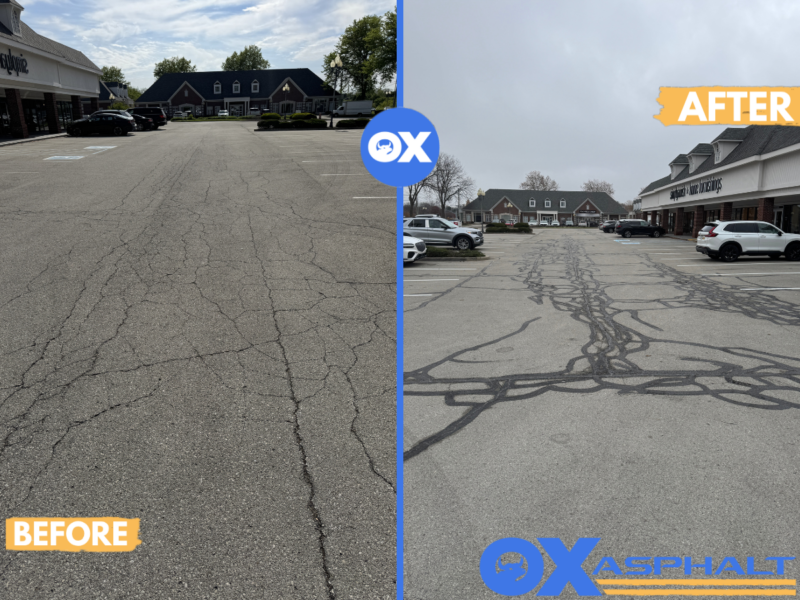
Crack sealing Indianapolis parking lots and driveways is one of the smartest investments property owners can make. Small cracks in your parking lot or driveway might not seem like a big deal today. But left untreated, those hairline fractures turn into potholes, structural damage, and repair bills that cost 10x more than prevention. Crack sealing is your parking lot’s first line of defense against water damage, and knowing when to seal can save you thousands in repairs. But here’s the question every property owner asks: When should you actually seal those cracks? The answer depends on several factors we’ll break down below.
Crack sealing is a preventive maintenance process where hot rubberized sealant fills and seals cracks in asphalt pavement. The flexible sealant bonds to the crack walls, preventing water, debris, and chemicals from penetrating the pavement base. This is different from crack filling, which uses a less flexible material. Crack sealing is specifically designed for “working cracks” that expand and contract with temperature changes. The rubberized material moves with your pavement instead of breaking apart.
Water is asphalt’s worst enemy. When moisture seeps through cracks and reaches the base layer, it weakens the foundation. Freeze-thaw cycles are the silent killer of Central Indiana parking lots. Water seeps into tiny cracks, freezes overnight, expands, and forces those cracks wider. Repeat this dozens of times each winter, and small issues become major repairs. Indianapolis typically experiences 100+ freeze-thaw cycles per year. A crack that starts as a hairline fracture in October can become a 2-inch gap by March, and a pothole by the following winter. What to look for:
The fix: Every $1 spent on crack sealing saves $6-10 in future repairs. For a commercial parking lot in Carmel or a retail center in Greenwood, that can mean the difference between a $2,000 maintenance visit and a $20,000 resurfacing project.
Crack sealing works best in moderate temperatures, typically between 40°F and 70°F. In the Indianapolis area, spring (late March through May) and fall (September through early November) are your ideal windows. Many property managers in Westfield, Avon, and Brownsburg schedule crack sealing as part of their spring maintenance routine. Others prefer fall application to protect pavement heading into the harsh Indiana winter. What to look for:
The fix: Act while cracks are narrow. Once they exceed an inch in width or show edge deterioration, you’ll need more expensive repair methods.
Professional crack sealing follows a specific process to ensure long-lasting results. Here’s what to expect when you hire a qualified asphalt contractor in Indianapolis:
Crack sealing is one tool in a complete pavement maintenance program. Here’s how it compares:
Central Indiana presents unique challenges for asphalt maintenance:
Crack sealing in the Indianapolis area typically ranges from $0.50 to $3.00 per linear foot. A typical commercial parking lot might have 500-2,000 linear feet of cracks that need attention. For residential driveways in Carmel, Fishers, or Noblesville, crack sealing typically costs between $150-$400 depending on size and severity. Properly applied crack sealant lasts 3-5 years. When combined with regular sealcoating every 2-3 years, you can extend your pavement’s useful life by 50% or more.
Your parking lot or driveway is a significant investment. For property owners throughout Indianapolis, Carmel, Fishers, Westfield, and Central Indiana, crack sealing Indianapolis is one of the simplest, most cost-effective ways to protect it. The key is acting early, before small cracks become expensive problems.
We serve commercial and residential properties throughout the Indianapolis metro area, including Hamilton County, Hendricks County, Johnson County, and Marion County. Contact Ox Asphalt today for a free crack sealing assessment and keep your pavement in top condition for years to come.
A properly sealed lot lasts 25+ years. An unsealed one? Maybe 15.
That’s thousands of dollars in early replacement costs.
We’ll inspect your lot for free and tell you exactly how many good years you have left.